Turkish media are reporting new developments regarding the Cyprus issue, referring to a model of a loose confederation, with *Milliyet* describing it as a “promising move” by the European Union regarding the Cyprus issue, while Hürriyet writes that Ankara remains steadfast in its position on a two-state solution.
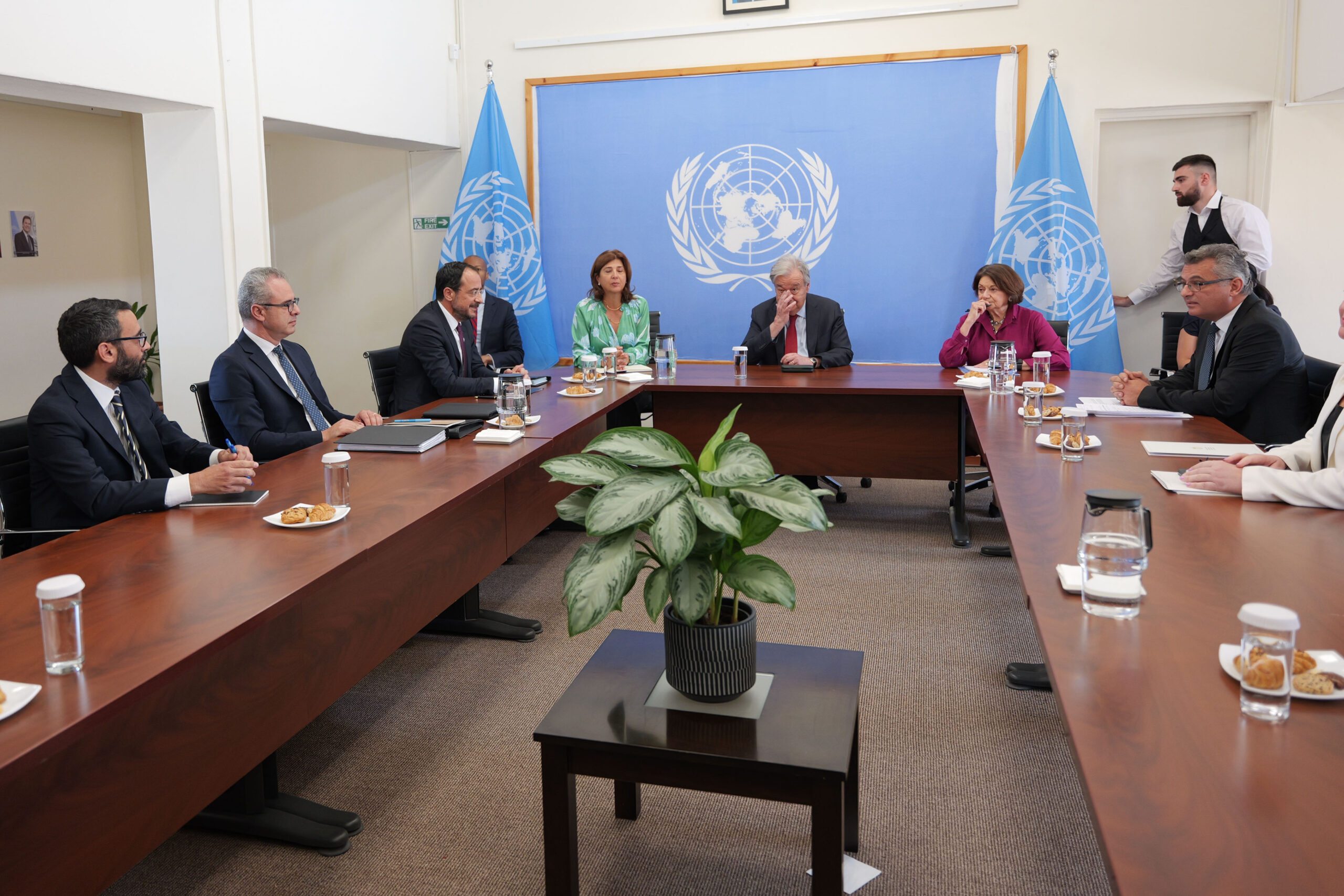
Milliyet reports that UN Secretary-General António Guterres has clearly expressed his intention to restart the talks. His personal envoy on the Cyprus issue, María Ángela Olguín, is reportedly working on the framework of objectives, the format, and the methodology of the new process.
ΣΧΕΤΙΚΑ ΑΡΘΡΑ


According to the newspaper, the talks are expected to be guided by the model of a loose federation, with limited powers for the central government and broad powers for the two constituent states.
It reports that European Commission President Ursula von der Leyen appears determined to support the process, noting that any solution must be compatible with the European acquis.
Milliet also refers to the appointment of Italian Commissioner Raffaele Fito as the EU’s special envoy for the Cyprus issue, describing him as someone Ankara could not reject from the outset.
The newspaper notes, however, that time is of the essence. Citing diplomatic sources, it reports that an agreement based on a loose federation could be reached by May 2027. Conversely, any extension of the process beyond June of that year may be influenced by the presidential elections in the Republic of Cyprus.
Hürriyet, for its part, notes that, despite the new momentum, Turkey remains steadfast in the position it adopted after the collapse of the talks at Crans-Montana in 2017. According to the newspaper, Ankara believes that the sovereign rights of Turkish Cypriots can be secured only through a two-state solution.
At the same time, Hürriyet reports on a UN “strategic agreement” currently under development, which could serve as a roadmap for a new effort toward a resolution.
According to the report, the plan is still in the conceptual stage and is said to include a decentralized, loose federation, a Presidential Council with equal representation from both sides, and a two-year transitional period.
According to the same source, during this transitional phase, consideration could be given to opening the Tympou airport and the ports in the occupied areas to international traffic, as well as territorial adjustments requested by the Greek Cypriot side.
Hurriyet also reports that consideration is being given to replacing the current system of guarantees with a new security mechanism under NATO, involving Turkey, Greece, the United Kingdom, the U.S., and France, as well as the gradual withdrawal of Turkish troops.
The report links potential progress on the Cyprus issue to steps in Turkey–EU relations, such as the upgrading of the Customs Union, Ankara’s participation in the European defense program SAFE, and visa liberalization.
Turkish Cypriot journalist and analyst Yusuf Kanli argues in an article that the Cyprus problem is not limited to the constitutional model, but concerns the collapse of the internal and external balance that had been established in 1960.
According to Kanli, a sustainable solution first requires the restoration of strategic trust between Turkey and the European Union and the creation of new institutional mechanisms that will balance the advantages of Greece and the Republic of Cyprus as EU member states.
He believes that the discussion should not be limited to a choice between a federation and a confederation, but should focus on restoring a political and strategic balance that all sides will consider fair.
Source: CNA