



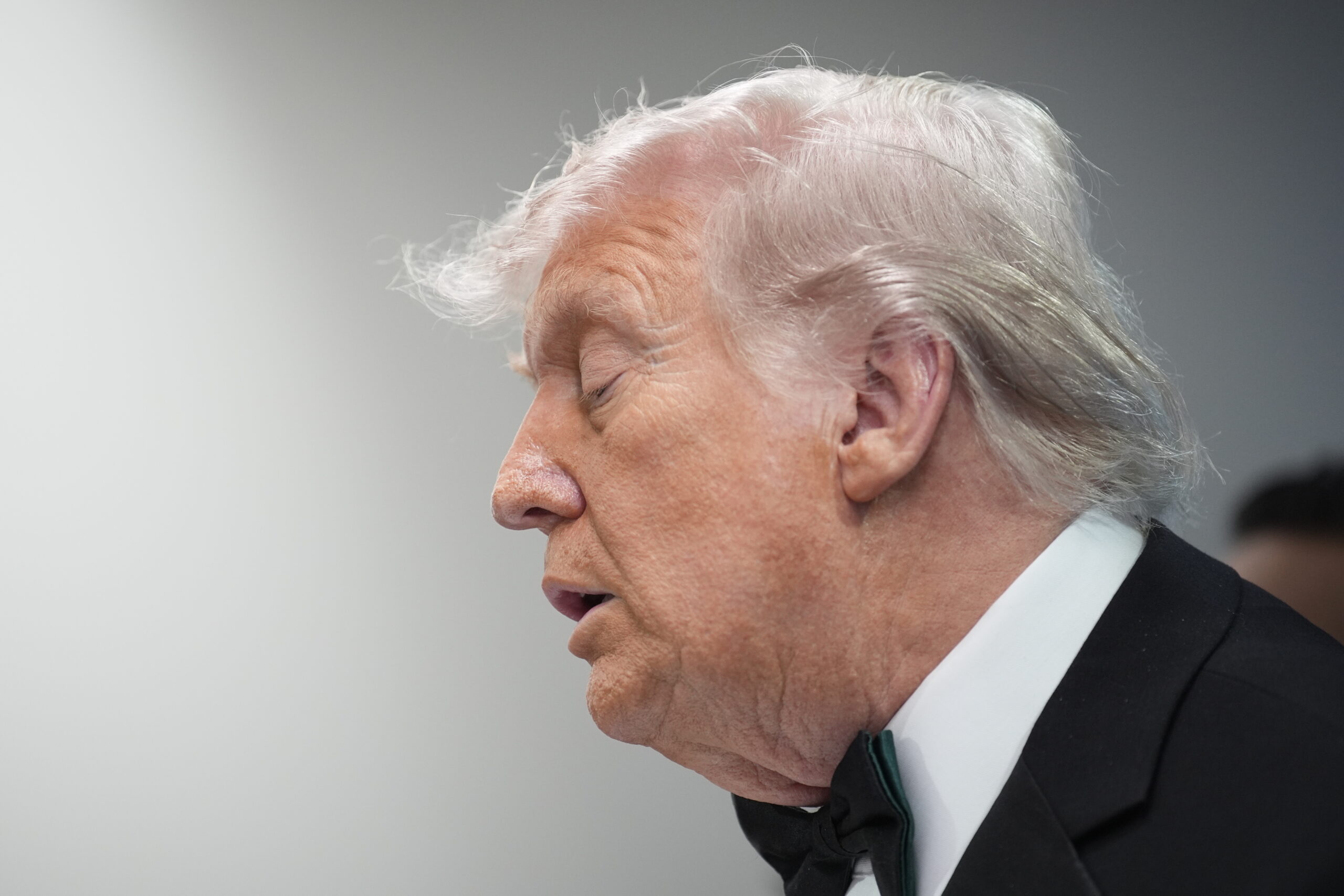
U.S. President Donald Trump said today that he does not like to set deadlines, when asked by reporters what deadline Iran has before the U.S. military begins bombing bridges.
“I don’t like to set deadlines, but they know very well, they know how it goes… They’d better behave,” Trump said.
ΣΧΕΤΙΚΑ ΑΡΘΡΑ


The Houthis attacked airports in Saudi Arabia
Yesterday, Tuesday, the U.S. president had stated in an interview with Fox News that he would order the bombing of power plants and bridges in Iran starting next week ifif Tehran does not reach an “agreement.”
“Things are going to get really bad for them,” as “next week it will be the power plants’ turn” and the week after that, “the bridges will be next” if the Iranians “don’t sit down at the table to negotiate,” Trump told the television network.
At the same time, the U.S. military announced shortly after 10:00 p.m. on Wednesday in a post on X that it had launched a new wave of strikes against Iran, targeting military capabilities used to threaten ships passing through the Strait of Hormuz.
Earlier today, the U.S. completed a round of strikes targeting coastal defense systems as well as cruise missile storage and launch facilities on Iran’s Greater Tunb Island, according to an announcement by the U.S. Central Command (CENTCOM), which is responsible for the Middle East.
Galibaf: Tehran has no reason to abide by the agreement with the U.S. if it does not benefit from it
Earlier, Iran’s chief negotiator and Speaker of Parliament Mohammad Bayer Galibaf stated that if Tehran does not benefit from the “Memorandum of Understanding” with the U.S., “it has no reason to adhere to such an agreement.”
Iran’s national security depends on maintaining “Iranian arrangements” in the Strait of Hormuz, Galibaf added in a lengthy post on the Telegram platform.
According to the Iranian politician, Iran’s approach to its war with the U.S. and to negotiations to end it should be based on national interests, national security, and a long-term perspective. Tehran has no choice but to rely on its own strengths, he explained.
At the same time, however, Galibaf did not rule out the possibility of negotiations with the U.S. “Negotiation at this stage does not amount to a compromise but, along with war, is part of the strategy of resistance and the protection of national interests,” he said, according to Reuters. “The dichotomy of choosing either negotiation or war as the only solution is a strategic mistake,” he added.
Source: Proto Thema







