The remarks made by Nikodimos Damianos, Deputy Minister of Research and Innovation, before the Parliamentary Committee on Transportation sparked a storm of reactions, that his office is responsible for the “chaos” that affected thousands of Cypriot households due to the transition of private television stations to the Hellas Sat platform and the new DVB-T2 technology.
DISY MP Charalambos Pazaros stated that the transition to the new digital television broadcasting platform cannot be considered a success since it left thousands of households facing a “No Signal” message.
ΣΧΕΤΙΚΑ ΑΡΘΡΑ


“For many of our fellow citizens—especially the elderly, people belonging to vulnerable social groups, and residents of remote areas—television is not a luxury. It is their primary source of news and daily companionship. The government should have prepared for the transition in a way that did not deprive any citizen of access. Instead, many were faced with the need to purchase a new set-top box or other equipment, at a cost that is particularly burdensome for many families—especially those on low pensions.”
Mr. Pazaros emphasized that “in several European countries, the process of preparing and informing the public about similar digital transitions lasted between two and five years, while at the same time, subsidy programs were implemented to provide the necessary equipment for vulnerable groups.
“Unfortunately, there was no such planning in Cyprus, and this was acknowledged by the Deputy Minister of Innovation.Digital modernization must be a step forward for everyone and not a source of hardship. It must serve the citizen and not create new inequalities. For the Democratic Alarm, protecting consumers—particularly from profiteering—and ensuring equal access for all to information and entertainment are top priorities. We demand a full resolution of the problem with television signal reception at no additional cost and without further delay.”
Speaking on the Alpha News program, AKEL MP Konstantinos Konstantinou explained that vulnerable segments of the population have been cut off from their connection “to the outside world,” since for many of our fellow citizens, television is their only companion and their sole source of information.

Mr. Konstantinou noted that the members of parliament have set a specific framework for action for the Deputy Ministry for the coming quarter, and they will monitor its implementation.
“We have requested a support plan and subsidies for vulnerable population groups, as well as retroactive compensation for those who have suffered or been victimized by profiteering. We are calling for market oversight because we must stop invoking the term ‘free market’ and end up with lawlessness.”
READ ALSO: Damianou’s “mea culpa” before Parliament regarding the “blackout” on the televisions of hundreds of citizens
DIKO Parliamentary Spokesperson Panikkos Leonidou stated that it is “necessary to resolve the problems caused by the digital transition and ensure the right to information.”
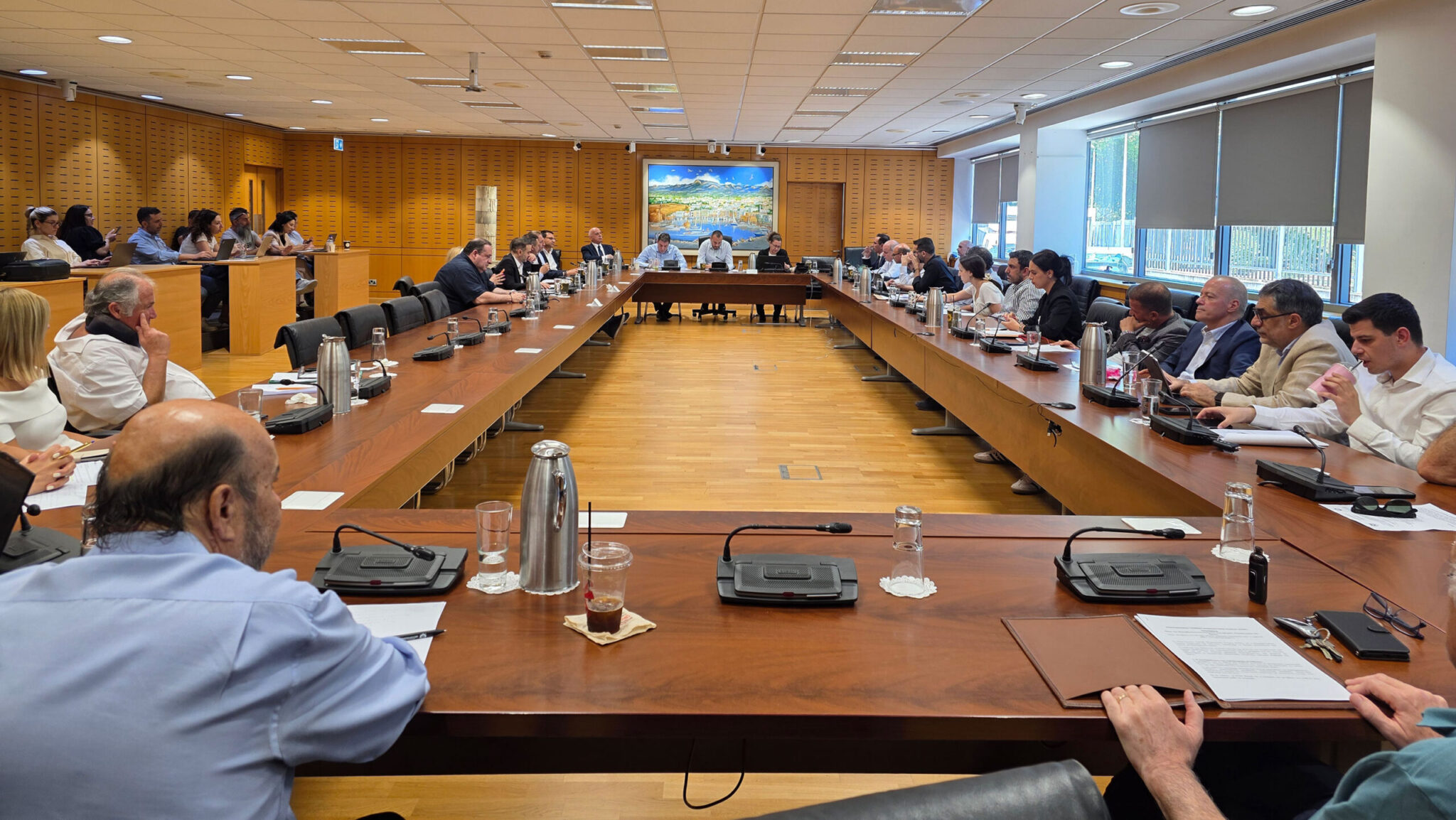
“Before the Parliamentary Committee on Transport, Communications, and Public Works, we examined today, following an initiative by the Democratic Party, the issue concerning the problems that arose with television signal reception following the transition to the new digital broadcasting platform. We welcome the fact that the Deputy Minister of Research, Innovation, and Digital Policy has acknowledged that there were problems during the transition process and has presented the corrective measures being implemented. Specifically, during the three-month transition period, technical adjustments will be implemented to effectively address the problems that arose. We view the Deputy Ministry’s intention to evaluate all the data, in collaboration with the relevant ministries, as very positive, so that the necessary decisions can be made to provide substantial support to citizens, including possible subsidies and retroactive reimbursement of the costs for the necessary equipment, particularly for retirees and vulnerable population groups. At the same time, we view positively the new contractor’s commitment that residents of Kaminaria, Lemithou, Tria Elia, and 60 other communities, will be able to watch all of Cyprus’s television channels—not just RIK. As the Democratic Party, we make it clear that our position is certainly not opposed to technological progress. On the contrary, we support every effort to modernize our country’s infrastructure, provided, however, that this transition does not come at the expense of citizens. Access to information and communication is an inalienable right of every citizen. Technological progress must serve society and ensure that no citizen—especially the most vulnerable—is excluded from access to information.”