



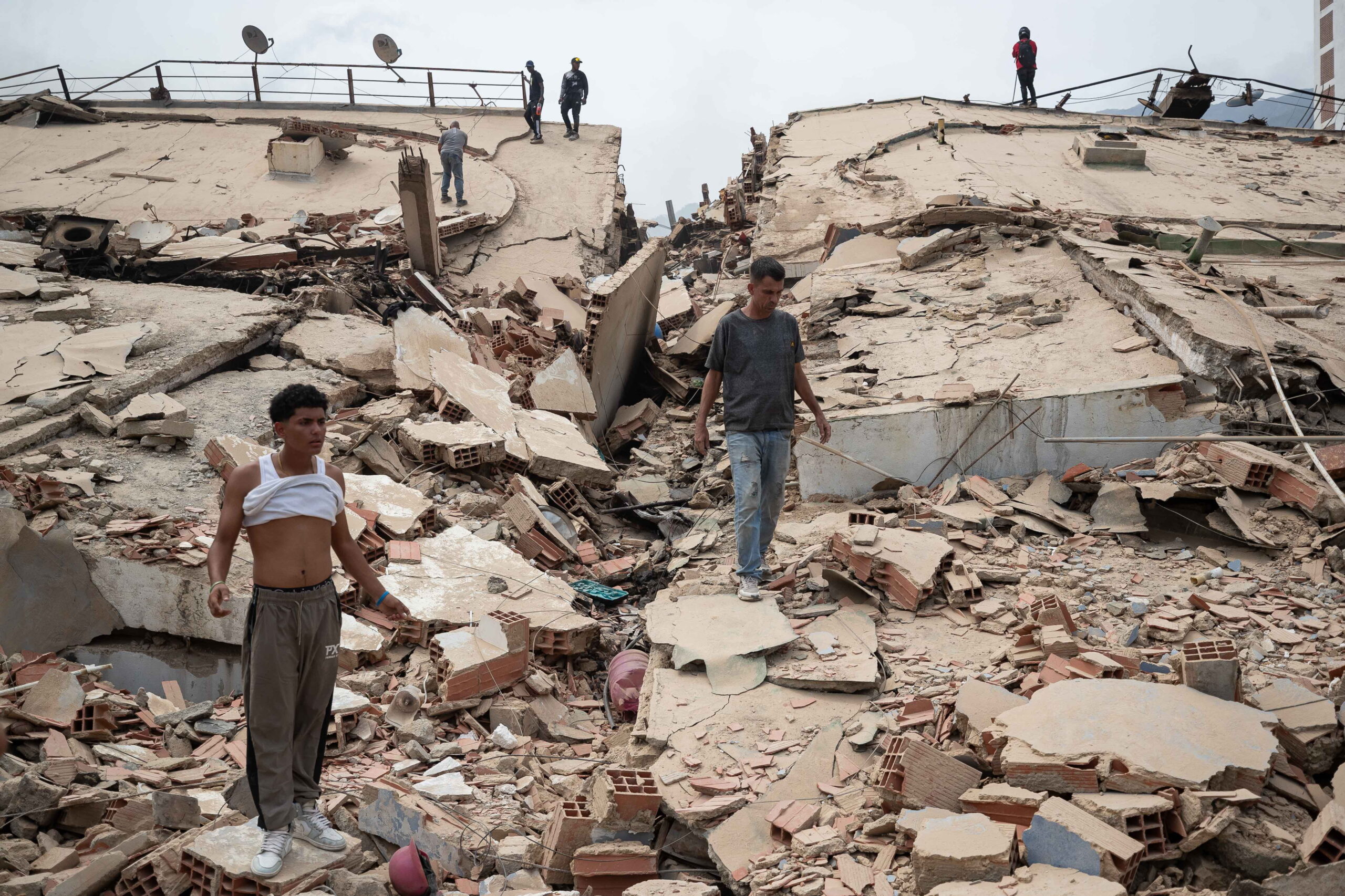
The official death toll from the earthquakes that struck Venezuela on June 24 surpassed 5,000 yesterday, Friday, but this figure remains provisional following the disaster that left thousands homeless, while Caracas announced that it had secured funding from the International Monetary Fund (IMF) in the amount of $346 million to begin reconstruction.
At least 5,069 people lost their lives when the Latin American country was struck by earthquakes measuring 7.2 and 7.5 on the Richter scale, 39 seconds apart, causing widespread destruction in the northern part of the country, particularly in the state of La Guaira, according to data released yesterday by Parliament Speaker Jorge Rodríguez. The number of injured remained unchanged at 16,740.
ΣΧΕΤΙΚΑ ΑΡΘΡΑ

Canadian Anne Carson Wins the Nobel Prize in Literature

A Look Back at Apollon’s International Soccer Players
The number of missing persons remains unknown. The government is refraining from making estimates. The day after the disaster, the UN estimated that the number could be as high as 50,000. Hundreds of buildings were damaged or completely destroyed, mainly in La Guaira.
Of the nearly 20,000 people left homeless, most are living in makeshift camps in La Guaira, a popular destination near the capital, Caracas—on sports fields, in squares, and on sidewalks.
To finance reconstruction projects, Venezuela secured the release of 346 million that had been frozen by the IMF, as the international financial institution did not recognize Nicolás Maduro as the legitimate president; he was overthrown in a bloody U.S.-led military operation in January.
The funds will make it possible to provide “support to families” affected by the disaster, securing resources for “housing, infrastructure, and essential public services,” Acting President Delcy Rodríguez summarized yesterday.
The IMF and the World Bank announced in April that they had begun the process of restoring their relations with Venezuela, which had been suspended in 2019, a few months after the ouster of former President Maduro.
In Guaira, relatives of victims and volunteers continued searching for bodies in the rubble yesterday. Some were using heavy machinery to lift walls so they could reach their loved ones.
“There are a lot of people down there,” but “no one wants to touch the dead,” Ildeigar Muhika, a 60-year-old economist searching for his ex-wife, buried beneath massive chunks of concrete in the rubble of a 12-story apartment building.
“At no point did government agencies show any interest in the bodies,” he exclaimed. Although “there are visible bodies, if there are no families to identify them, they are not taken into account” and are not included in the death toll, he added.
In early July, Acting President Rodríguez insisted that “no one will be buried in a mass grave.”
As the days go by, some are turning to “moles”—private individuals who, for a fee, help families recover their dead.
Joan Torumo, a 45-year-old volunteer from Waira, condemns this practice.
“I know someone who was charged $1,300,” said the rescuer, criticizing the lack of assistance from government agencies in recovering the bodies.
Contact with “moles” is made with the utmost discretion, he said, and the fee for each body recovered is $300. “When they find your loved one, they ask you for a black trash bag and bring the body to you inside it,” he noted.
READ ALSO: Strong earthquake rocks southeastern Turkey | AlphaNews
Source: KYPE








