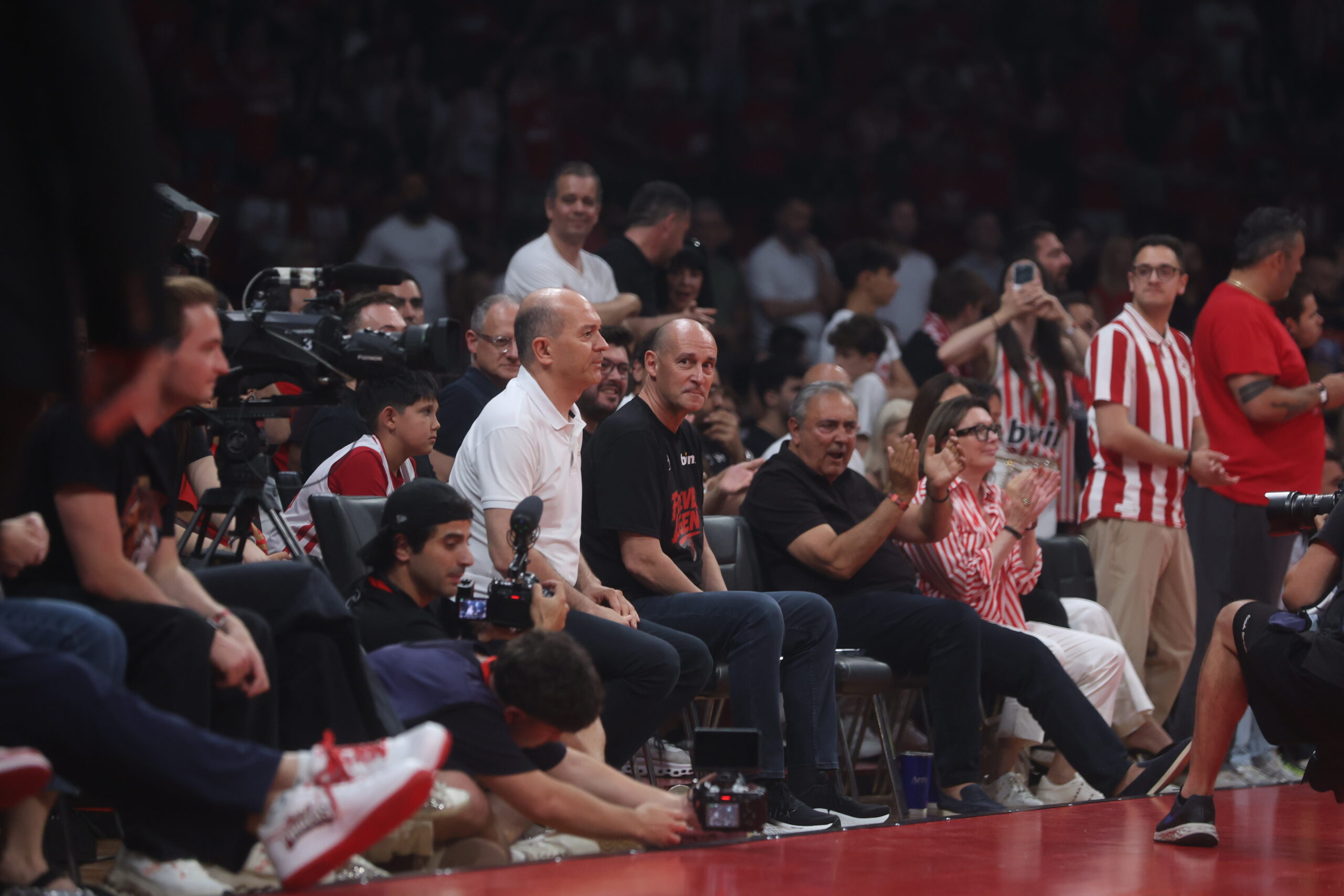
The background to the much-talked-about case of Thomas Walkop and his departure from Olympiacos was revealed by the Texan’s agent. David Caro spoke to AS, unraveling the details of the case, in which he essentially passed the buck to the Piraeus club regarding his client’s moves and demands.
In detail:
ΣΧΕΤΙΚΑ ΑΡΘΡΑ


“It required a tremendous amount of work and was very intense. In negotiations of this magnitude, you sometimes reach a breaking point, and that’s when both sides realize that a settlement isn’t going to happen, that’s when things calm down and it becomes clear that what’s in everyone’s best interest is to reach an agreement. Because we were determined to take the matter to court.”
-So, what was reported was true: “Indeed, an appeal was filed with the BAT, the FIBA court. That happened. Later, when we reached an agreement, it was withdrawn, but the appeal had already been filed. Wokap’s issue had nothing to do with Dubai; it was a problem he’d been having with Olympiacos. He was in this mess anyway because of his situation at a club that hadn’t made any effort to keep him long-term. They didn’t offer better terms or anything else—nothing—no matter how hard we tried to talk to them. And the player decided that his time there was over.”
-But Olympiacos wasn’t happy with the offers they were receiving either: “He had made it clear that he wasn’t going to return; that decision took precedence over all others. So, he exercised his legal right to unilaterally terminate the contract, knowing, of course, that compensation would have to be paid—an amount that, if necessary, would be determined by the court. He took this step because returning to Olympiacos was not an option.
And that’s when the offers started coming in—three of them from EuroLeague teams. The team that bet the most on him was Dubai. And owner Abdullah Saeed Al Naboodah, along with general manager Dejan Kamenjasevic, were willing from the start to work out a deal with Olympiacos.”
-Olympiacos eventually realized as well that this was the best outcome for everyone: “At the end of the day, they had a player for whom they had made no move to renew his contract, who didn’t want to return, and who had unilaterally terminated his contract. On the other hand, there was a team willing to negotiate on terms that solved your problem. So, a financial agreement was reached that was good for both sides. It looked good for Dubai, because financially, it’s a rising power. And the player got what he wanted: a long-term project, with a contract in the salary range befitting a key player on the EuroLeague champion’s roster.
Obviously, there were many negotiations and sleepless nights… But that’s part of our job. Dubai’s legal team worked closely with Olympiacos to finalize the deal, which was the most expensive buyout in EuroLeague history. So, it makes us very proud.”
-You know that, with Dubai BC in the mix, the big talk is that the market has become “predatory” and that everything is determined by the money from these new, up-and-coming clubs: “But that’s a big lie. It’s the easy excuse the top EuroLeague teams have now: blaming Dubai and Hapoel for market inflation. But it’s completely false.”
-But it’s an idea shared by many fans: “Olympiacos and Panathinaikos spend much more money; Efes spends more… What’s happening is that these are teams with a tremendous history and a lot of pride; all the players are used to wanting to go there, and to be the ones who poach players from the mid-tier and smaller teams in the EuroLeague itself. To be the “bullies” of the neighborhood, so to speak.
That’s always been the case: the big fish eats the little fish. How many players have Olympiacos or Fenerbahçe signed from Baskonia? Or Barcelona and Real Madrid? It’s a pyramid structure. Now Dubai or Hapoel have the financial clout to compete at this level. And those who’ve always had a stranglehold on the pie—dividing up the best players among themselves—don’t want that.”
-It makes things difficult for them: “They don’t like that other people can have access to that part of the pie, that they can compete for their players. Dubai wanted Silven Francisco, wanted Jean Montero… They made them offers, tried to sign them, and couldn’t. They chose Panathinaikos and Olympiacos. This debunks the “money” theory. If it were only about that, much higher contracts would have been offered, and the players would now be in Dubai. Xavi Pascual tried to sign them but couldn’t. And they went to the Greek teams.”
-On traditional EuroLeague powerhouses: “Obviously, they’re financial powerhouses, but they don’t go to those teams just for the money. They go for that, of course, but also because they get multi-year contracts, because they’re historic teams with winning programs, because Athens is a fantastic city to live in, because they have great coaches… it’s a combination of factors. But since we’re talking about Dubai, it’s very easy and simplistic to just say “the money.”
-Perhaps the case of Wokap was particularly striking because he seemed like a player deeply identified with Olympiacos, who also plays for the Greek national team: “They want to present it that way because it served their interests. Clubs always do this, but I’m on the player’s side—my job is to protect him. It’s good to say that he’s very attached to the club, that he’s been there for five years, that he has a Greek passport… Well, then show him some respect. He’s a champion and a starter: show him some respect. Trust has to work both ways.”
*photo source: KYPE