Fifty-two years after the Turkish invasion, the wounds of war remain open for thousands of people. The loss, the uncertainty about the fate of those missing, and the trauma continue to affect families.
In comments to Alphanews.Live, psychologist Dr. Aristoniki Theodosiou Tryfonidou explained that in the grief of war, the trauma is not only the loss of a loved one, but the way in which it occurred. That is, violently, unpredictably, and often without a chance to say goodbye.
ΣΧΕΤΙΚΑ ΑΡΘΡΑ


“It is a grief that mourns not only the dead but also the world that was lost along with them.”

Ambivalent grief and families of the missing
Ambivalent mourning is a form of mourning that arises when the loss is not clear-cut or definitive, or when the person’s fate remains unknown.
Regarding the families of the missing and how they experience grief, Ms. Theodosiou stated that, while their loved one is physically absent, they are emotionally “present” in their daily lives.
“Hope, which is usually our driving force, becomes an obstacle here, keeping families in an endless waiting room.”
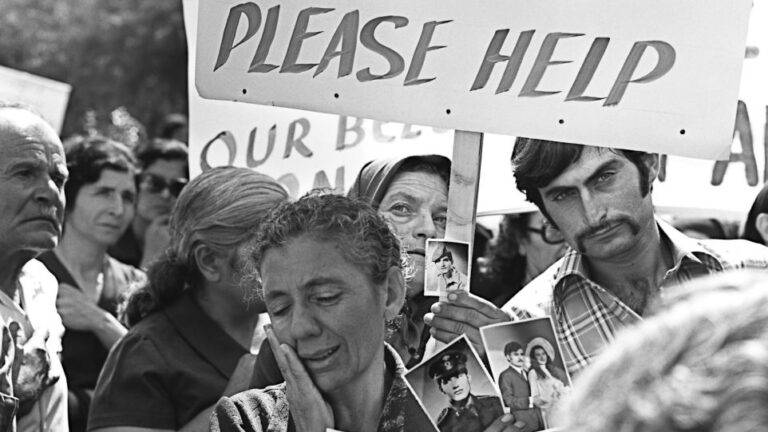
As she herself notes, families’ grief does not “fade” with time. She explained that when the loss is traumatic, the brain’s neurons record the event in a way that makes it “non-negotiable.”
“It remains vivid because it is the only thing that connects the individual to that part of their life that was left unfinished.”
When asked why such anniversaries bring back intense emotions years later, he noted that they are not merely dates on the calendar, but moments when our bodies remember what our minds have learned to accept. He noted that it is the moment when absence becomes tangible once again, reminding us that, no matter how many years pass, love has no expiration date.

Trauma and Future Generations
As Ms. Tryfonidou points out, trauma can be passed down from generation to generation through family narratives. Referring to intergenerational transmission, she argues that subsequent generations inherit not only the characteristics of their ancestors but also the invisible burden of their own unspoken experiences.
Memorial ceremonies also play a crucial role in healing wounds, particularly in the case of families of the missing, where there is no specific way to say goodbye.

“It is not an act that keeps us stuck in the past, but one that allows us to integrate absence into our lives. Memory is thus transformed from a ‘burden we carry’ into a ‘bridge’ that allows us to keep our loved one by our side, no longer as a source of pain, but as part of our own identity and values.”.