



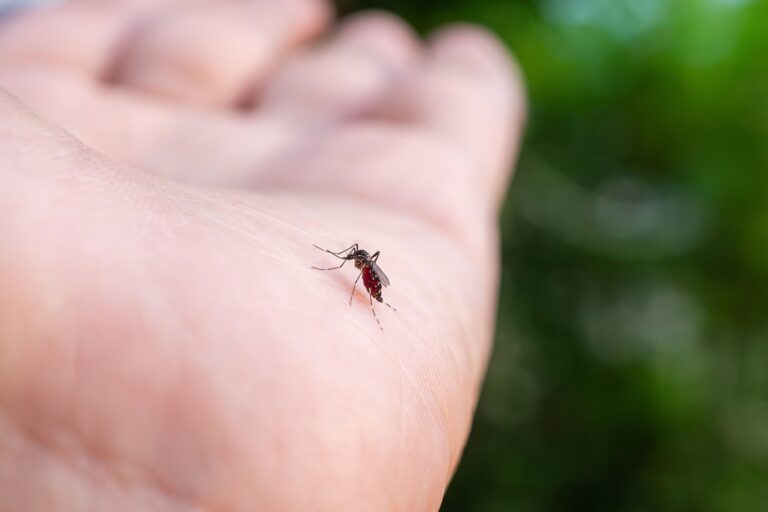
The Municipality of Nicosia is carrying out intensive spraying in areas that are potential breeding grounds for mosquitoes, following the surge in the problem caused by the recent heavy rainfall, while Health Services have also pointed out that addressing the problem depends to a large extent on the citizens themselves, as more than 60% of the outbreaks are found in homes and yards.
Speaking to CNA, Michalis Lagos, Head of the Nicosia Municipality Health Services, stated that the recent natural disaster, combined with increased sunshine and high temperatures, has created many potential mosquito breeding sites, both in public and private areas.
ΣΧΕΤΙΚΑ ΑΡΘΡΑ


As she explained, these conditions favor mosquito hatching, while different species require different control measures.
Efi Hatzikosti, First-Class Public Health Officer for the Municipality of Nicosia, told CNA that spraying takes place throughout the year, both in public spaces and in response to complaints from citizens.
Following the recent heavy rainfall, she said, the Health Services have already begun intensive spraying since last week, working overtime and on weekends, in areas considered potential breeding grounds for mosquitoes. At the same time, there has been an increase in related complaints from citizens.
According to Ms. Hatzikosti, the biggest problem is in the Engomi area. However, it is particularly significant that more than 60% of the breeding sites where municipal services are called upon to spray are located inside homes, in yards, or in neighboring homes.
“These breeding sites are caused by human activity,” he said, explaining that they include, among other things, containers of water, saucers under flowerpots that retain water, pools or tanks that have collected rainwater, as well as unused pools that have filled with water.
Containers of water for pets can also serve as breeding grounds for mosquitoes if the water is not changed frequently.
Ms. Hatzikosti urged residents, especially after severe weather events, to check the outdoor areas around their homes and remove any objects or containers where water has accumulated.
Mr. Lagos explained that, due to the short life cycle of mosquitoes, which is approximately eight to nine days, breaking the hatching cycle can significantly contribute to a more effective solution to the problem.
“If these containers of water are left exposed and a mosquito lays eggs, an egg-hatching cycle will begin,” she said, emphasizing the importance of promptly removing standing water.
Ms. Hatzikosti noted that there are mosquitoes that breed primarily in stagnant water, such as that found in the aforementioned hotspots, but also others that thrive in vegetation and grass and are found in various locations.
As he noted, several residents are asking the Municipality to carry out large-scale spraying, even on grassy areas or private property, something which, as he explained, cannot be done for safety reasons and to protect public health.
At the same time, he recommended that residents water their gardens early in the morning rather than at night, so that the soil has dried by nightfall and no moisture remains to attract mosquitoes. He also recommended clearing the area around the roots of low-growing plants and shrubs so that the soil does not remain damp for long periods.
Mr. Lagos noted that in a previous instance, municipal services had discovered a forgotten vase of water inside a home, which had become a breeding ground for mosquitoes, thus underscoring the importance of individual responsibility in prevention.
The Nicosia Municipality’s Public Health Services conduct spraying not only in households but also in public spaces and rivers, Ms. Hatzikosti noted.
Spraying is carried out on a scheduled and regular basis, while emergency measures are also taken in cases of natural disasters and heavy rainfall.
At the same time, a program is underway in collaboration with the United Nations to combat mosquitoes in the dead zone. The program runs from March through October, every two weeks, with spraying of rivers and breeding sites within the dead zone along the city.
According to Ms. Hatzikosti, these efforts also cover areas of Engomi, Kaimakli, Pallouriotissa, and Aglantzia.
Meanwhile, the Municipality of Nicosia is also promoting the use of drones for pest control spraying in areas where access is difficult.
As Mr. Lagos noted, the Municipality is in the process of awarding the relevant contract and expects that the first drone-based spraying operations will take place very soon.
He urged citizens to take precautions to protect themselves and to follow the guidelines issued by the Municipality and the Ministry of Health. Among these measures is the installation of screens on residential windows.
The Head of Health Services also linked the need for prevention to the impacts of climate change, noting that extreme weather events and heavy rainfall are expected to become an increasingly frequent reality and create favorable conditions for mosquito breeding.
In the event of an outbreak, she added, citizens can use appropriate repellents and other products, as well as window screens, noting, however, that the indiscriminate use of chemical products can affect the environment.
“It would be better to take a holistic approach with greater concern for the environment,” he said.
In conclusion, Mr. Lagos noted that the Municipality of Nicosia and its departments remain vigilant, while also emphasizing that it is equally important for citizens to learn how to protect themselves and prevent the problem on their own.
Citizens can contact the Nicosia Municipality’s departments regarding serious issues by calling 22797000, and they can also submit complaints through the Novoville app.








