



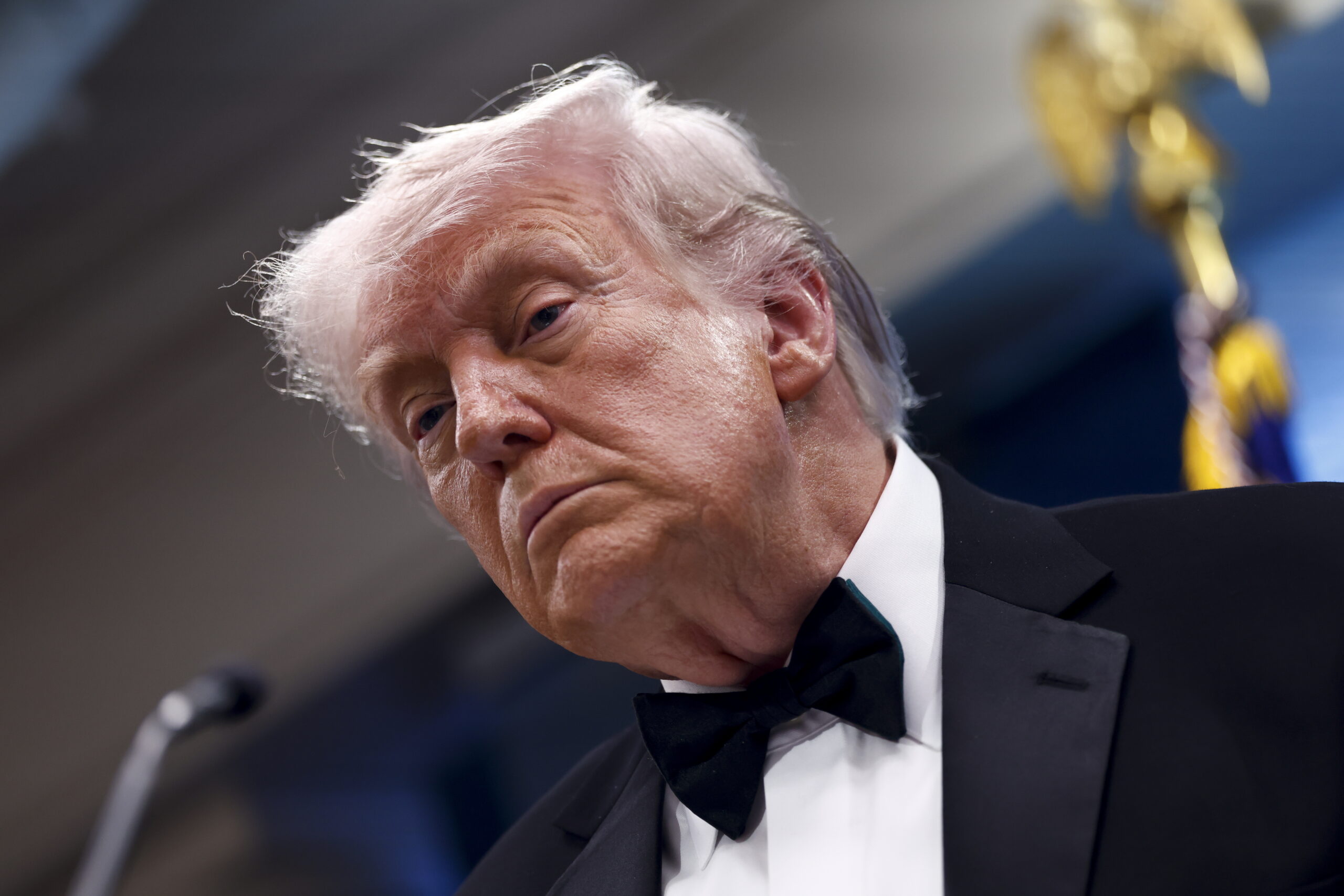
Not even 24 hours had passed since his announcement regarding the imposition of transit duties of 20% of the value of the cargo on commercial ships passing through the Strait of Hormuz, and President Trump retracted his statement.
This development in fact confirmed the assessment expressed last night (July 13) on ALPHA Cyprus’s main newscast by our station’s analyst on Middle East issues, Gabriel Charitos, that this particular announcement is very likely a tactical move rather than a final and enforceable decision. After all, some time ago, U.S. Secretary of State Marco Rubio had characterized the imposition of transit tariffs as illegal, referring to similar Iranian threats.
ΣΧΕΤΙΚΑ ΑΡΘΡΑ

Canadian Anne Carson Wins the Nobel Prize in Literature

A Look Back at Apollon’s International Soccer Players

However, President Trump, in his post today on Truth Social, states that the tariffs he intended to impose will be replaced by bilateral agreements that the U.S. will conclude with the Gulf states in exchangefor the military protection of the Strait of Hormuz that U.S. forces will provide in the region—a possibility whose legality is, at the very least, debatable.
Will behind-the-scenes contacts between Iran and the U.S. continue?
On the other hand, Iran’s stance toward the U.S. appears to be hardening. The spokesperson for the Iranian National Assembly’s Parliamentary Committee on National Security, Ebrahim Razai, stated today that theframework agreement signed by Iran and the U.S. is no longer valid, accusing Washington of having officially declared war on Iran by violating all the terms of the agreement.
As Mr. Charitos noted, this is a statement of significant institutional weight on the part of the Tehran regime, raising questions about whether behind-the-scenes contacts between Iran and the U.S. will continue, with all that this may entail for upcoming developments in the region.
Watch Gabriel Haritou’s report live from Jerusalem on tonight’s main news broadcast on ALPHA Cyprus with Dimitra Makrygianni






