



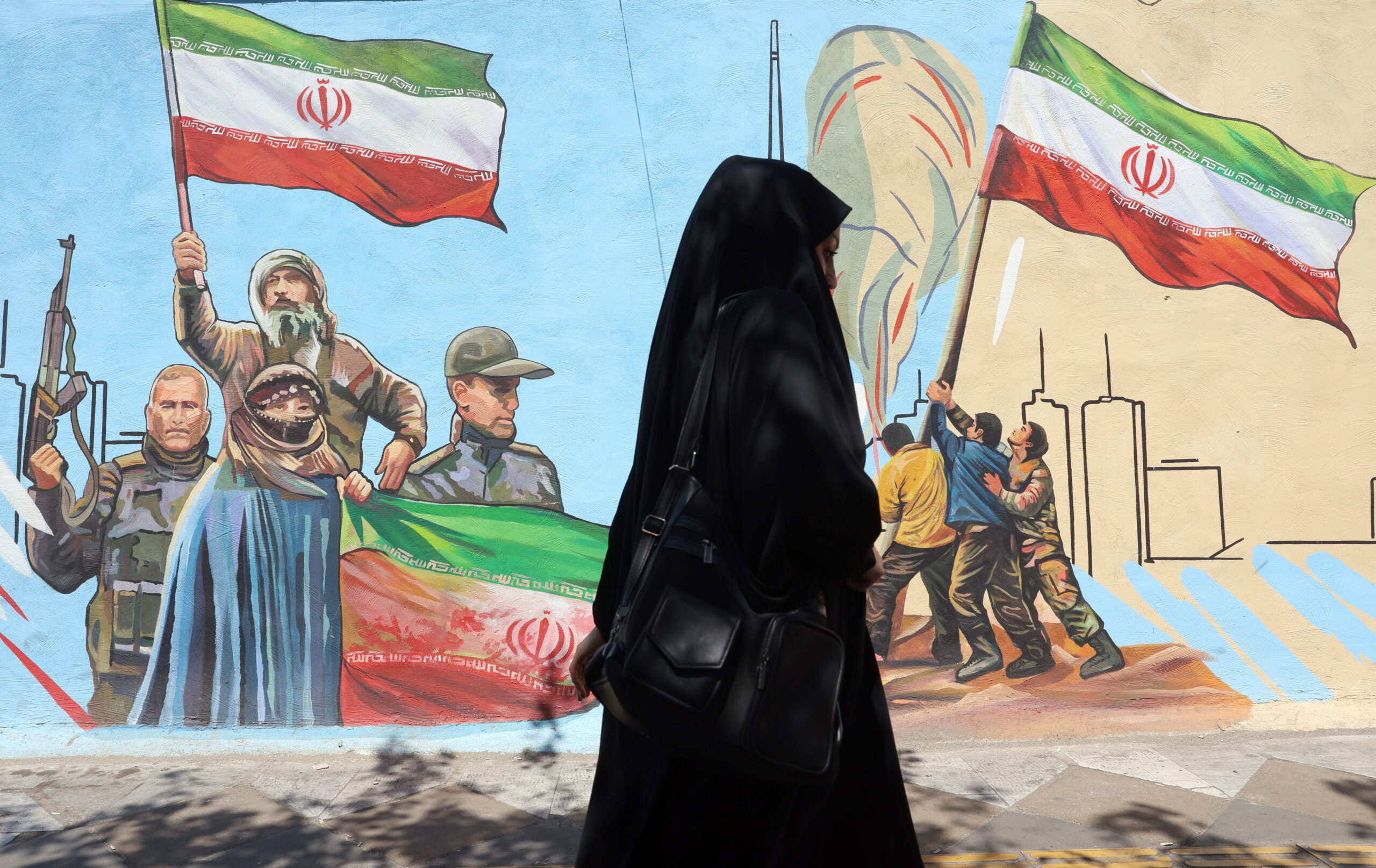
Iran will use new weapons and target locations it has not attacked so far if the United States launches a new attack against it, said Revolutionary Guards spokesman Hossein Mohammadi, according to the Fars News Agency.
“If a new attack occurs, we will certainly change the weapons and the geography of the war,” Mohammadi said, adding that Tehran is prepared for a protracted conflict.
ΣΧΕΤΙΚΑ ΑΡΘΡΑ

Canadian Anne Carson Wins the Nobel Prize in Literature

A Look Back at Apollon’s International Soccer Players
Meanwhile, Iranian Foreign Minister Abbas Araghchi, is on his way to the UN General Assembly; before arriving in New York, he will make a stop in Qatar, a mediating country in the U.S.-Iran conflict.
The Iranian minister “departed from Tehran on Sunday evening for New York (…) and will make a brief stop in Doha to hold consultations on the latest developments in the region,” the agency reported.
The U.S. announced on Thursday that it had decided to allow the Iranian delegation, including President Masoud Pezeskian, to attend the UN General Assembly despite the ongoing war.
Aragchi’s stance in Doha comes as Iran stated that it had conveyed its conditions for opening the Strait of Hormuz to the U.S. via Doha.
The Iranian foreign minister’s trip comes as Tehran and Washington exchange threats, with no agreement in sight to end the war.
Meanwhile, France will summon the Iranian ambassador and take appropriate measures in response to the Iranian authorities’ decision to close the French Language Center (CLF), one of the main institutions for teaching the French language in Iran and affiliated with the French Embassy, the French Foreign Ministry announced today.
“This latest attack on France’s cultural presence in Iran, which follows the attack on two members of the French Embassy staff last July, is unjustifiable and unacceptable,” said a spokesperson for the French Ministry of Foreign Affairs.
Iranian authorities decided to close the CLF, citing its involvement in “illegal activities,” the Iranian judiciary announced today without providing further details.
Strait of Hormuz and GDP
The gross domestic product (GDP) of the Islamic Republic of Iran contracted significantly between March and the end of June, when the country was under bombardment by U.S. and Israeli armed forces, according to official data released yesterday, Sunday.
During this period, which corresponds to the first quarter of the Persian calendar, GDP contracted by 10.1% on a year-over-year basis, including the oil sector, according to the Statistics Center, an official agency, as the Islamic Republic’s economy relies heavily on hydrocarbon exports.
During the previous U.S. embargo, from April through June, the country was unable to export even “a single barrel of oil,” as noted by Iranian chief negotiator and Parliament Speaker Mohammad Bayar Galibaf.
The economy has been plagued for years by chronic hyperinflation and the sharp devaluation of the national currency, the rial, due to sanctions. The war has further exacerbated this phenomenon, which is rapidly eroding the purchasing power of Iranians.
Inflation rose by 69.9% year-over-year in August, according to the official figure, which is estimated to fall far short of reflecting the massive price increases, especially for food products.
Meanwhile, the Iranian currency continues to depreciate against foreign currencies. The exchange rate against the dollar stood at approximately 1 to 2.3 million rials yesterday, Sunday, according to Agence France-Presse, citing websites that track the black market for foreign exchange.
The International Monetary Fund (IMF) forecasts a 5.4% contraction in Iran’s GDP this year, according to its latest estimates, released in July.
Over the weekend, a total of twelve commercial ships passed through the Strait of Hormuz, down from 35 last weekend, according to preliminary data obtained today by Reuters, as tensions in the Gulf continue and negotiations between the U.S. and Iran to end the war remain at an impasse and have effectively been suspended.
This picture may not be complete, as several ships are crossing the strait with their position-tracking devices turned off, as part of the Automatic Identification System (AIS), to make it more difficult to track and target them.
READ ALSO: The Middle East on High Alert: Washington Fears Rapid Escalation on the Houthi Front | AlphaNews
Source: KYPE/APE-MPE





