




By Stelios G. Prokopios
- International Relations Scholar, Ph.D. Candidate in International Relations
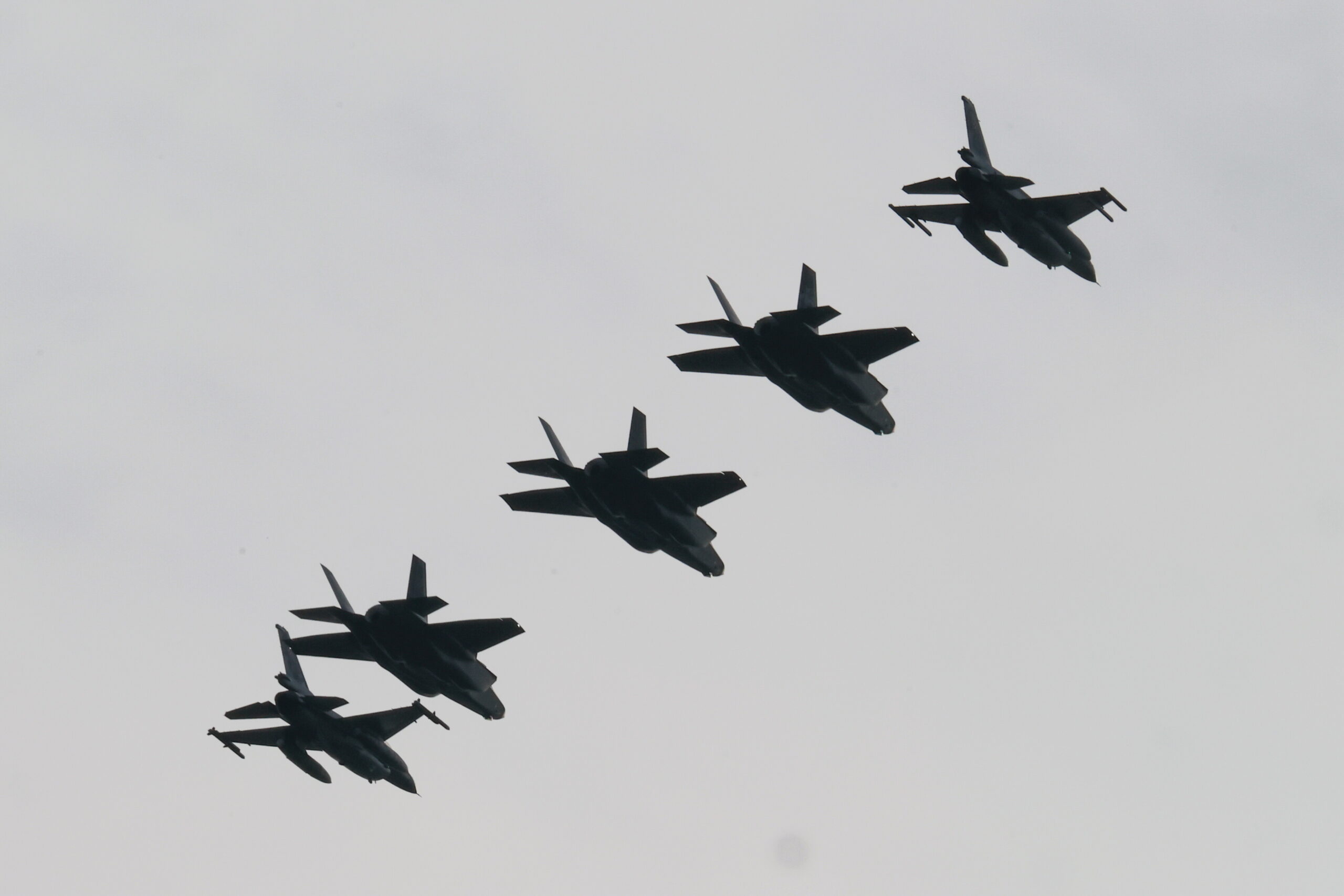
Following the conclusion of the 36th Summit of the North Atlantic Treaty Organization (NATO), the dominant topic that dominated the Greek and Cypriot media—and not without good reason—was the discussion regarding Turkey’s potential procurement of American F-35 fighter jets. Despite the fact that Donald Trump, prior to his arrival in Ankara, had promised gifts and good news to Recep Tayyip Erdoğan, at the conclusion of the summit, there was no clear stance, only promises to reconsider the issue of Turkey’s possible reintegration into the F-35 program or to approve a future sale of the aircraft.
ΣΧΕΤΙΚΑ ΑΡΘΡΑ


Obviously, the main problem for Turkey is its purchase of Russian S-400 missiles and U.S. sanctions under the CAATSA law—sanctions, it should be noted, that were imposed in 2019, during Trump’s first term. Washington’s concern was that Turkey could use the S-400s to “reverse-engineer” the F-35s, allowing Russia to learn how to counter the fighter’s stealth capabilities and missile-evasion systems. Consequently, in order to overcome the legislative obstacle established by Congress, Turkey would have to “dispose of” the S-400s.
However, this issue is not limited to relations between Washington and Ankara. Behind the F-35s lies a broader conflict of interests involving Greece, the Republic of Cyprus, and, above all, Israel.
At the summit, when asked about the F-35s, Kyriakos Mitsotakis said that “it is not our business” to comment on agreements regarding weapons systems between two other states, but at the same time he highlighted the issue that Turkey continues to threaten Greece with a casus belli, which, as he said, must be abolished, characterizing it as a “historical inaccuracy.”
At the same time, in a clearer and more direct manner, Israeli Prime Minister Benjamin Netanyahu publicly expressed his deep concerns about such a development, as he has linked his opposition to Ankara’s behavior toward Greece and the Republic of Cyprus. He argues that a country that disputes sovereign rights in the Eastern Mediterranean and maintains troops in northern Cyprus cannot easily acquire the United States’ most advanced fighter jet.
This line of reasoning is no coincidence. In recent years, Israel, Greece, and the Republic of Cyprus have built one of the strongest networks of strategic cooperation in the region.
Tel Aviv, however, has much more at stake at this juncture. Behind what appears to be a mere arms deal, there is a broader geopolitical confrontation between Turkey and Israel, which highlights the importance attached to the superiority of this particular fighter jet.
First, as we mentioned, Israel now recognizes the importance of strengthening the role and bilateral relations between Greece and Cyprus, which is why several officials in the Netanyahu government are publicly expressing support for Athens and Nicosia. This line of reasoning is no coincidence. In recent years, Israel, Greece, and the Republic of Cyprus have built one of the strongest networks of strategic cooperation in the region. Joint military exercises, cooperation on air defense, intelligence sharing, and energy partnerships have forged a relationship of strategic depth.
For Israel, Greece is now a key pillar of stability in the European Union, while Cyprus has taken on particular importance as both an operational and an energy hub in the Eastern Mediterranean.
Furthermore, as the only country in the region to possess F-35s, Israel enjoys qualitative military superiority. The aircraft is the core of its deterrent capability. Turkey’s entry into the same category would limit this strategic advantage, providing the Turkish Air Force with stealth capabilities, advanced intelligence-gathering capabilities, and long-range strike capabilities—particularly at a time when the two sides are clashing in Syria.
Behind the dispute over the F-35s, an even greater rivalry is unfolding. The Eastern Mediterranean is becoming a pivotal region for global energy and international trade. The natural gas reserves of Israel and the Republic of Cyprus, along with Greek infrastructure and new maritime and digital interconnections, are creating a new geo-economic landscape.
At the center of this is the IMEC (India–Middle East–Europe Economic Corridor), a project aimed at connecting India with Europe via the Gulf states, Israel, and the Eastern Mediterranean. It is not merely a trade corridor. It constitutes a network for the transport of goods, electricity, green hydrogen, fiber optics, and digital data. Greece is expected to be the main gateway to the European Union, while the Republic of Cyprus is gaining increasing importance as an energy and digital hub.
Turkey, however, is trying to pursue a different strategy. Ankara wants to become the main land corridor connecting Asia with Europe via Syria, capitalizing on its relations with the new Syrian leadership and its geographical location.
For postwar Syria, becoming part of such a corridor could serve as a catalyst for economic reconstruction, attracting significant investment in transportation, energy, and infrastructure.
Israel, on the other hand, believes that this plan would undermine its own geostrategic role and unduly strengthen Turkey’s regional influence. For this reason, it is promoting an alternative axis of cooperation between India, the Gulf states, Israel, Greece, and the Republic of Cyprus, which would bypass Turkey. This axis will be based on maritime transport and energy interconnections in the Eastern Mediterranean.
Consequently, a new balance of power is beginning to take shape. The F-35 issue has become a symbol of a broader strategic confrontation. It is not just about which country will acquire an advanced fighter jet. It is about who will dominate the new geopolitical and geoeconomic reality of the Eastern Mediterranean.
On one side is Turkey. It seeks to become an energy, trade, and military hub between Asia and Europe, while investing in the development of its domestic defense industry.
On the other side is Israel, which is building strategic partnerships with Greece, the Republic of Cyprus, the Gulf states, and India, in an effort to maintain its qualitative military superiority and its central role in the new energy and trade corridors.
In this light, the F-35s are less the subject of the dispute and more its symbol. Washington’s final decision will not merely determine the outcome of an arms deal. It will reveal how the United States views the future balance of power in the Eastern Mediterranean, the Middle East, and the new geo-economic landscape taking shape from India to Europe.





