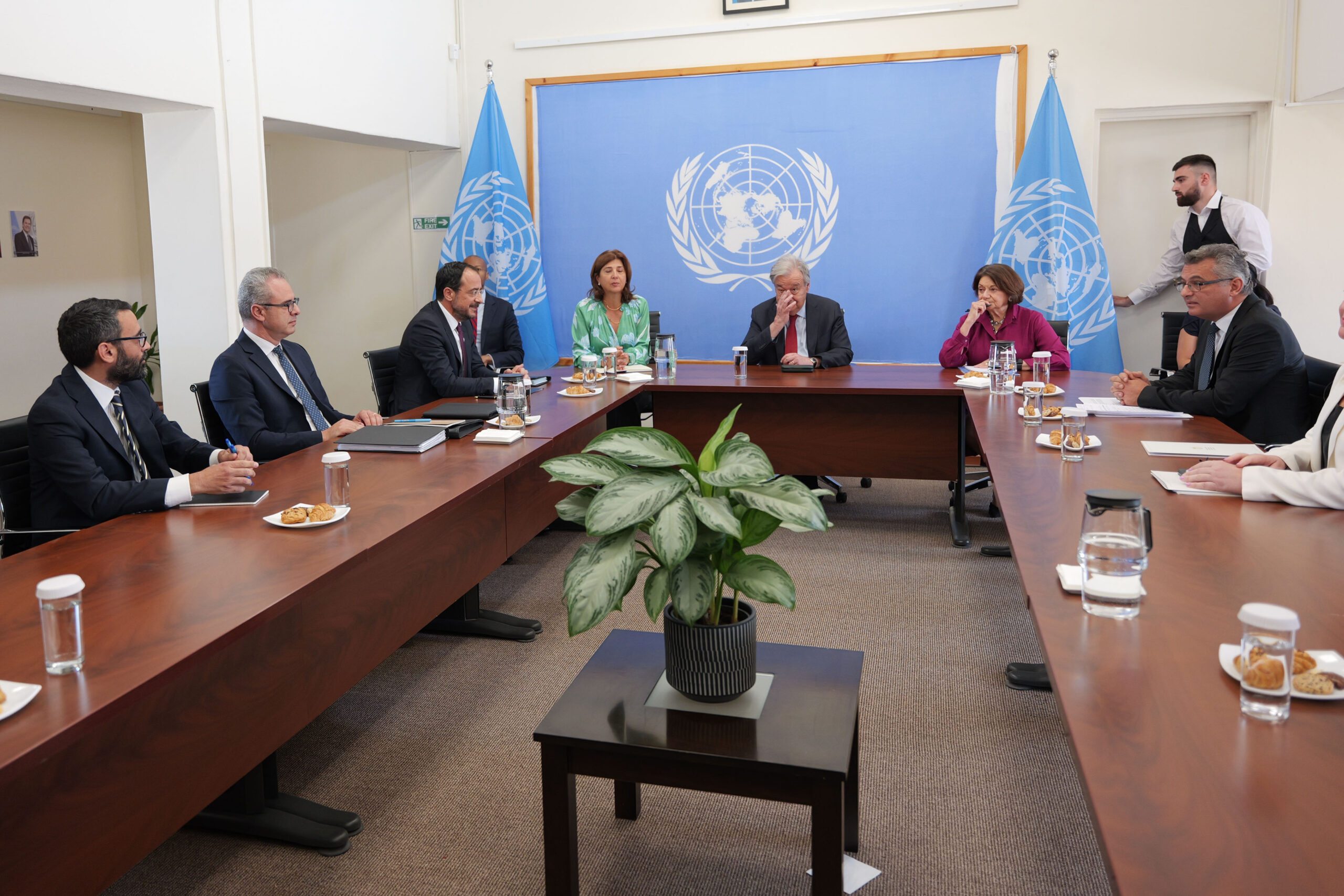
A joint statement was issued on Tuesday evening by the EU High Representative for Foreign Affairs and Security Policy and Vice President of the European Commission, Kaia K, Enlargement Commissioner Marta Kos, and Commissioner for Home Affairs and Migration Magnus Brunner, along with Turkish Foreign Minister Hakan Fidan, in which they expressed “support for the UN Secretary-General’s efforts regarding the Cyprus issue.”
The statement, issued following the conclusion of the three European officials’ visit to Ankara, it is noted that they also agreed on “the importance of regional stability and good-neighborly relations” and “reaffirmed their shared determination to take steps that will further strengthen the cooperative and mutually beneficial relationship” between the EU and Turkey.
ΣΧΕΤΙΚΑ ΑΡΘΡΑ


The four officials discussed EU-Turkey relations in the context of the global situation, recalling Turkey’s status as a candidate country and recognizing the strategic value of EU-Turkey relations-EU relations in promoting regional stability and economic resilience in a rapidly changing geopolitical landscape. They discussed issues of mutual interest, including economic cooperation and trade, connectivity, migration, security, and common challenges in the field of foreign policy and security, the report states.
READ ALSO: No More Cash Rent Payments: What’s Changing and Everything You Need to Know | AlphaNews
Regarding Ukraine, they agreed that “the European Union and Turkey share a commitment to supporting Ukraine’s sovereignty and territorial integrity and to supporting a just and lasting peace basedinternational law.”
With regard to the South Caucasus, they agreed “to coordinate complementary Turkish and European efforts to better contribute to regional peace and prosperity, by strengthening connectivity, trade, and economic ties.”
Regarding the Customs Union, “they reaffirmed their willingness to continue efforts to improve its implementation, while paving the way for its modernization.” They also agreed that “Turkey’s potential participation in the Single Euro Payments Area (SEPA) would be beneficial.”
Regarding migration, “they acknowledged the current geopolitical situation and its potential impact on migration flows” and expressed “their determination to work together to address them, including by strengthening cooperation on border management and combating the smuggling of migrants.”
They also discussed the current state of the Visa Liberalization Dialogue and exchanged views on the procedures for submitting and processing visa applications by Turkish nationals.
They underscored “the importance of cooperation in trade, energy, transport, and digitalization,” welcoming “the gradual resumption of the European Investment Bank’s (EIB) activities in Turkey.”
The EU side emphasized, in the context of enlargement, “the need to strengthen the rule of law, protect fundamental rights, and ensure high democratic standards.”
The EU “also reiterated the importance of preventing all states from circumventing its sanctions,” in the context of the discussion on Ukraine.
Finally, all agreed to meet again and plan upcoming rounds of high-level dialogue, preferably before the end of the year, in areas such as the economy, trade, migration and security, health, science and innovation, and agriculture, as reported.
Source: KYPE