



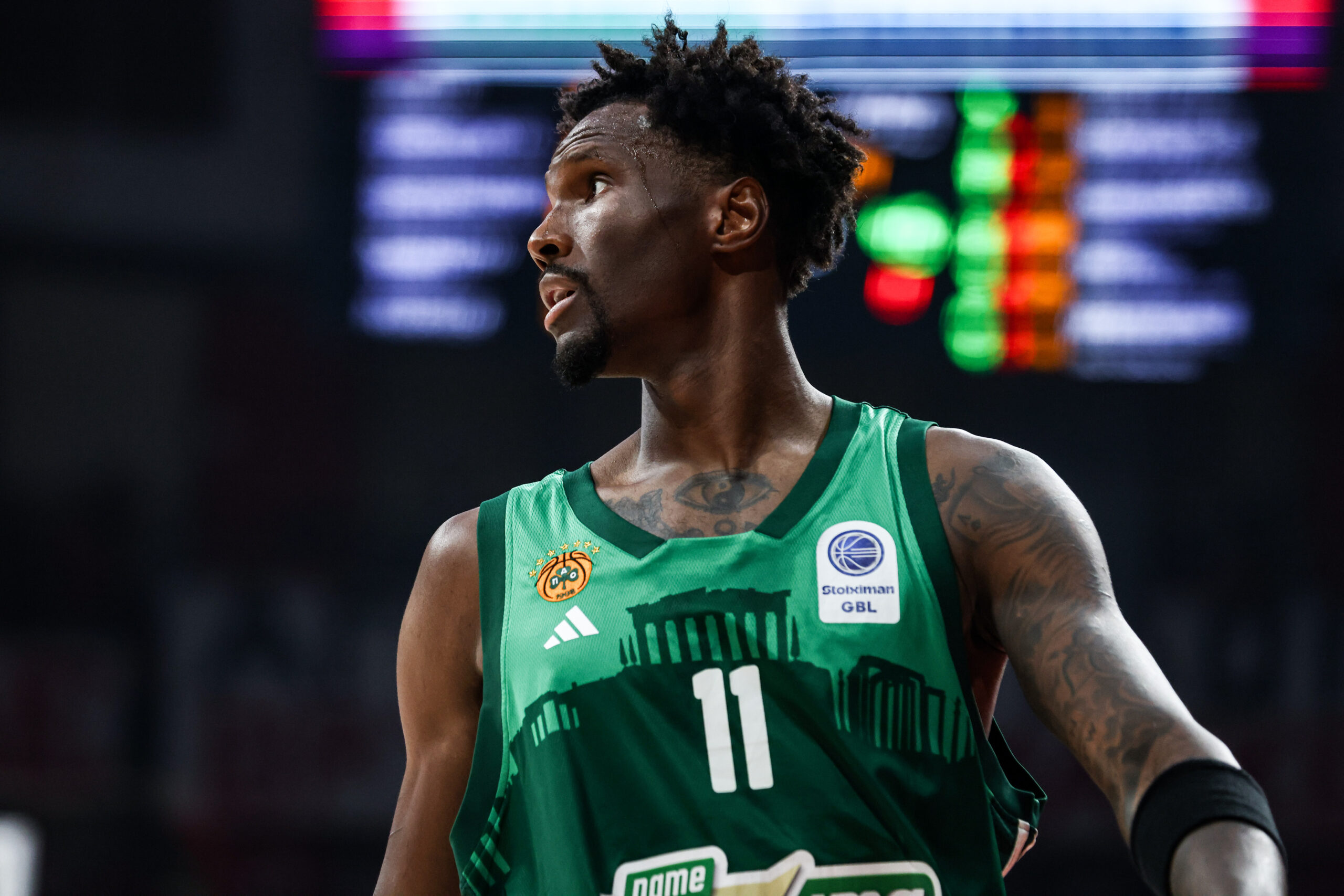
In a documentary, Nigel Hayes-Davis describes the culture shock he experienced upon arriving in Greece and witnessing firsthand the “madness” of the finals between Olympiacos and Panathinaikos, noting that he experienced utter chaos.
The American forward talks about how the Piraeus team was barred from training on their own before the finals at SEF, mentions ingratitude and people whose behavior he saw change, criticizes the refereeing, comments on his own performance in the series, and concludes with the enigmatic “… a part of me died this season, and we’ll see what takes its place.”
ΣΧΕΤΙΚΑ ΑΡΘΡΑ


In fact, on X, Hayes Davis states: “...I thank the haters who motivate me to become the most petty winner next year…”.
He spoke in detail about:
-the fact that they wouldn’t let him practice at SEF before the games against Olympiacos: “They’re making a spectacle out of not letting me practice before the game. All of Europe knows my training routine. By doing this on purpose, they know exactly what they’re doing—and they’re just giving me motivation. You’d expect there to be some mutual respect between the teams. If Sasha or Fournier wanted to come in earlier before the game to practice, I, as the DPG, would let them. This rivalry has existed since before I was even born, and it will continue even after I’m gone someday. There’s nothing you can do about it.”
-On the loss in Game 1: “We should have won that game, even though we took 20 fewer free throws. If I could have made even one shot in the last four minutes, we probably would have won the first game, and instead of losing 3-2, we would have won the championship. That’s frustrating, but that’s basketball… No matter how hard you work, you can’t win everything.”
-On Savvas Kamperidis’s hug in Game 1: “Savvas came over and made the situation seem less significant than it was from the start. He’s an amazing guy; I love him to death. But when he came over, people were saying I was crying, but I wasn’t. I was telling myself, ‘Bro, take a shot’ so we could win. But that just shows how much he cares. The whole thing was blown out of proportion. But it comes from a good person—you can’t complain.”
-The extreme emotions of the people in Greece: “When you’re doing well, you win, you’re a hero, and they put up a statue of you next to the Acropolis. When you lose, they hurl a barrage of insults at you—hateful and racist things. That’s just the nature of the job.”
-On his standout performance in Game 2 of the finals: “It’s all about making your shots. When you make them, you get the ball. That’s what I did in Game 2. But the job doesn’t change. Anyone can score 20 on this team. It just happened to be my day. We didn’t play a perfect game, but we played a good game, keeping up with Panathinaikos’s style of play for 40 minutes. The game and the fans are just numbers. All the players had games they wanted to win; it was to be expected that I’d even things out. I felt like I let my teammates down in the second final with my poor shooting.”
-On the officiating in Game 3: “I don’t like to complain. My mom didn’t raise me to complain, but if you look at the free throws, they weren’t in our favor and they affected the game. It’s unfortunate that we have two such strong teams and the series is being brought down to a lower level because of the referees. And referees can have bad games, just like I do.”
-On the win and the atmosphere in Game 4: “It was an amazing game; it was probably the best atmosphere from our fans since I’ve been here. I didn’t do much; I didn’t need to score a lot—I was just trying to be a good teammate. With so much talent, anyone can score 20 points. I got some good cardio in. I show up and try to do my job.”
-On not being allowed to practice even at the SEF auxiliary court before Game 5 of the finals: “I see why the atmosphere is so crazy and why they hate each other. Bringing in the police while I’m trying to practice, and then having to go to a nearby court— there are police there and staff telling me that if I don’t leave the court, they’ll be fired and have to take care of their families. Is all this happening just because I want to practice before the game? I went to a nearby field; then someone came and told me to take some shots, and then they came to kick me out—they turned off the lights… They’d rather fire someone than let me practice three hours before the game. I tried to get onto the court, but the police were there; they wouldn’t let me onto the court before 4:00 p.m. And there were some people staring me down from head to toe, trying to act tough. I see why people get upset. It’s a game for kids, and I’ll say it again. There’s passion, and it has to be channeled somewhere. So they take it out on sports and basketball. It’s crazy. The whole day was crazy. It’s all about the jersey, because I never had any problems when I played for another team. It is what it is (ed. note: in Greek).”
-On the loss in Game 5 of the finals and the incidents in the locker room: “I wish I’d made some of the shots I took. I made a few, but I wish I’d made more. It was chaos in the locker room. We didn’t leave the arena until two hours after the game ended. Total chaos. That’s all you can say.”
-On how he experienced this season: “I’m not the same Nigel when it comes to my relationship with basketball. I don’t know. The last year has been the most turbulent of my life in basketball. I’m not the same as I was before, and even less so after three months here (in Greece). I see how people can change, how memories and perceptions can shift, how behaviors and people themselves can change. How easily they forget, how ungrateful they become, how disrespectful… Especially when you consider the respect I show and the kind words I say. My mother used to say, “When you grow up, you’ll see.” And I saw. How do they put it… you either live long enough to become a hero or you die and become a villain. A part of me died this season, and we’ll see what takes its place.”
*photo source: KYPE





