



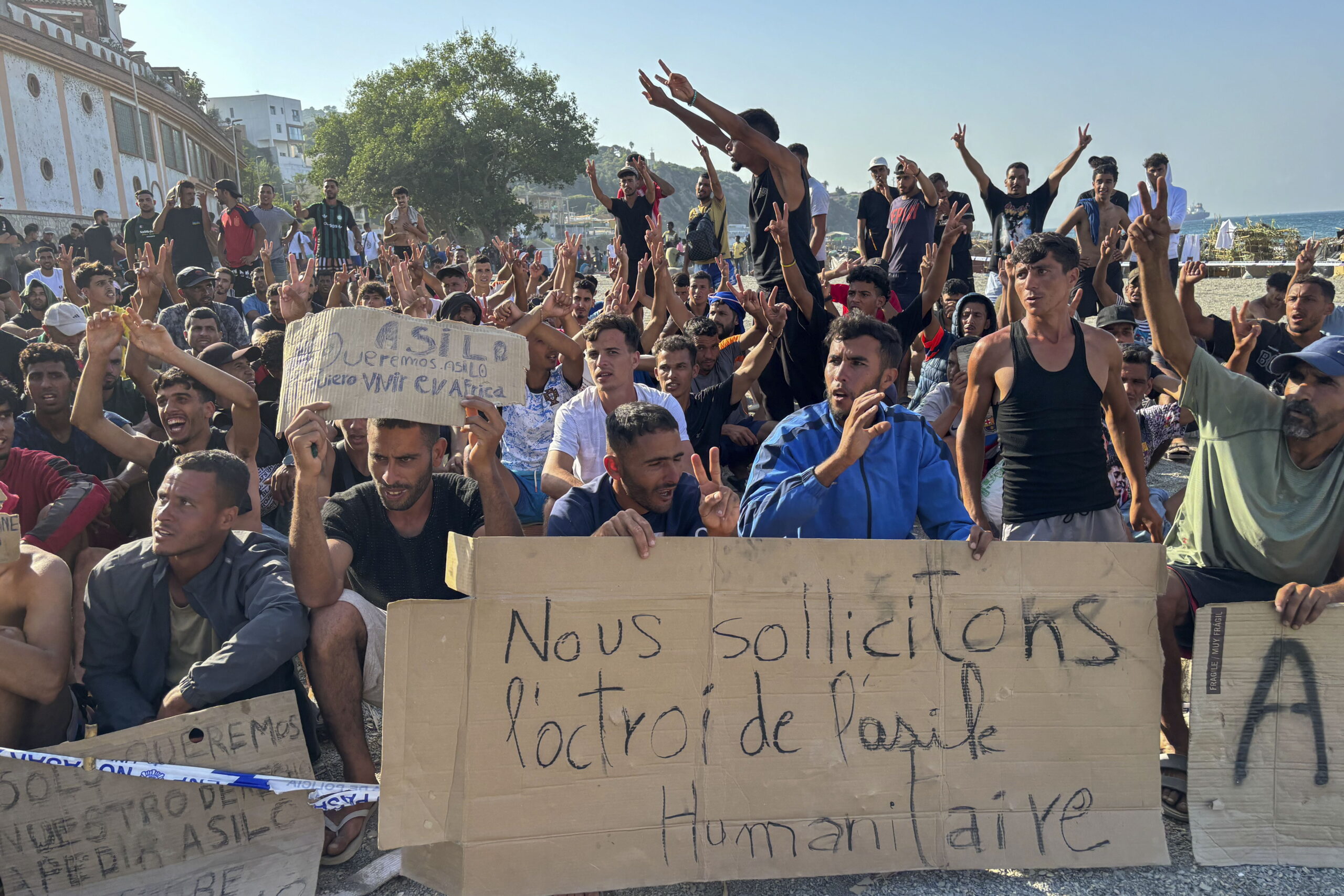
During a press briefing, the European Commission welcomed the announcement by the Spanish authorities regarding an increase in reception capacity in Ceuta, in light of the deteriorating humanitarian situation. However, the Commission stressed that the priority is for the Spanish and Moroccan authorities to maintain control of the situation and to ensure the swift return of those who remain in the Spanish enclave illegally.
“The priority now is for the Spanish and Moroccan authorities to maintain control of the situation,” said the Commission’s spokesperson on migration, Markus Lamert, adding that “positive results” were achieved over the weekend in the cooperation between Madrid and Rabat, preventing further irregular crossings.
ΣΧΕΤΙΚΑ ΑΡΘΡΑ


Lamerth noted that the technical mission that visited the region last week—including European Commissioner for Migration Magnus Brunner— gathered information on the needs on the ground, as “several thousand” people remain there, including a significant number of unaccompanied minors. He clarified, however, that the Commission does not have its own precise figure, emphasizing that “it is not our role” to conduct an official headcount, as it relies on estimates from local and national authorities.
The spokesperson recalled that Spanish authorities announced an increase in reception capacity to address the humanitarian situation, while the Moroccan authorities have stated they are ready to take back those who arrived illegally in Ceuta, including unaccompanied minors. At the same time, he noted the statements by the Spanish Minister of the Interior and the Minister of Foreign Affairs that no one remaining illegally in Ceuta will be transferred to mainland Spain.

Regarding unaccompanied minors, Lamert stated that the issue of return is governed by EU law, which includes specific provisions for minors. He added that the Commission has taken into account the statements by the Moroccan authorities regarding the facilitation of returns and called on Spain and Morocco to ensure their effective implementation, reiterating that the Commission “stands ready to facilitate and support” the process.
When asked about the temporary reinstatement of controls at the Schengen internal borders by Spain and Italy, Lamert confirmed that the Commission has received notifications from both countries, valid for one month, that is, until early September. He avoided taking a position on the merits of the legality or necessity of the checks, noting that the Schengen Borders Code provides for such a possibility and that Commissioner Magnus Bruner is in regular contact with the authorities in Madrid and Rome.
Regarding potential financial support for Spain, the spokesperson stated that there have been informal discussions, but the Commission is still awaiting a formal request from Madrid, despite statements by Spanish Minister Elma Sais that the request has already been sent. As for reinforcements with additional personnel from Frontex and Europol, Lamert reiterated that “our offer remains in effect,” but it is up to the Spanish authorities to activate it if they deem it necessary. He clarified that Frontex officers currently stationed in Ceuta are operating exclusively at the port.
Source: KYPE








