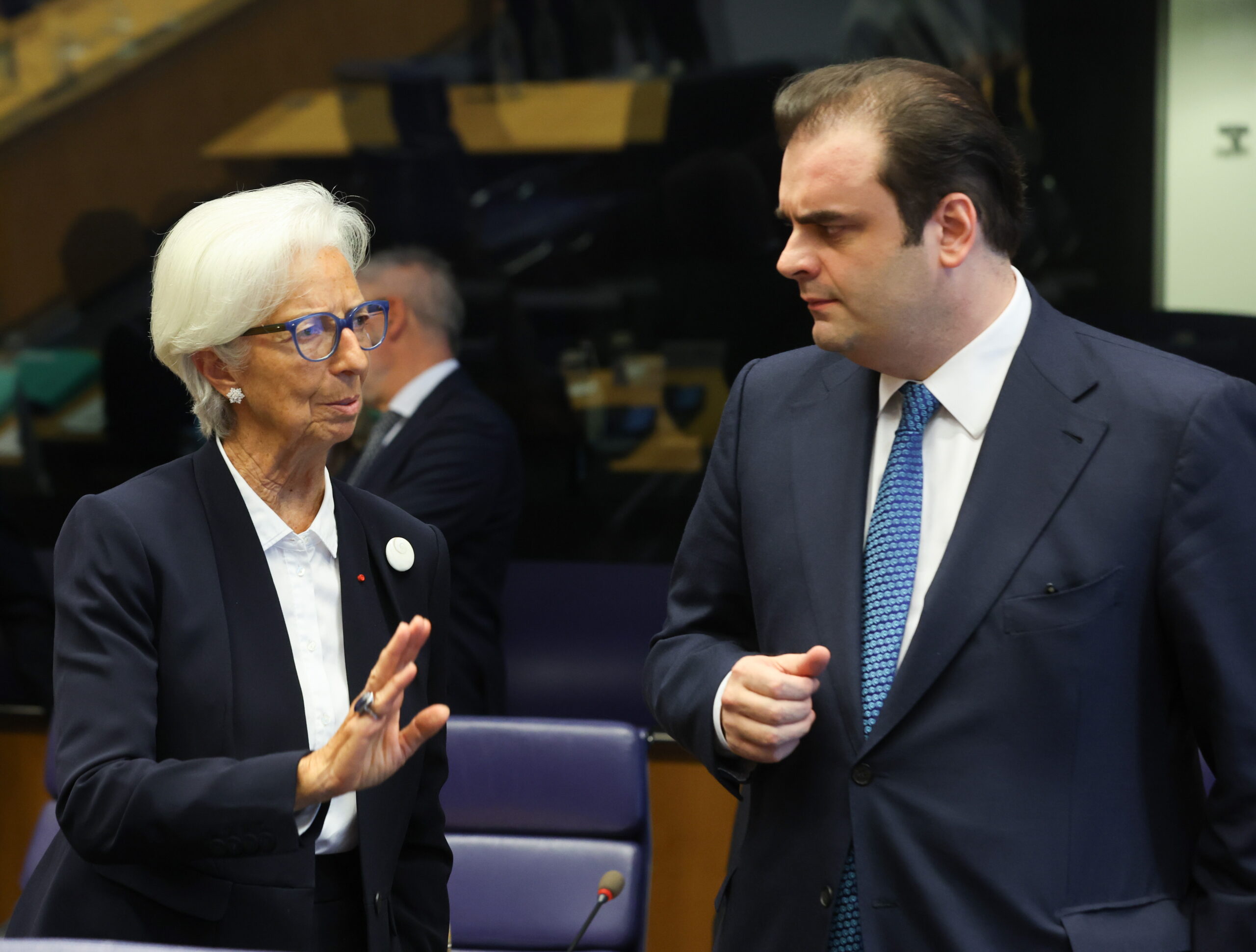
Anita Dimitriou’s withdrawal of her candidacy has changed Nikola Papadopoulos’s plans for ’28, and now DIKO is walking a fine line
Until the moment Anita Dimitriou withdrew her candidacy for the DISY nomination, DIKO’s plan for the 2028 presidential election included the possibility of supporting her in exchange for the Speakership of the House of Representatives. With the upheaval within DISY and the fluidity of the political landscape, a wide range of scenarios has opened up for DIKO. If Nikolas Papadopoulos ultimately decides to leave the government, he will be called upon to perform some political acrobatics, as the balance is as delicate as the distance between DIKO’s prospects of remaining in power and the potential fragmentation of the party’s unity. Given that the majority favors Nikos Christodoulides, Nikolas Papadopoulos will find it difficult to convince the majority to look elsewhere.
Nikolas–AKEL Discussion
ΣΧΕΤΙΚΑ ΑΡΘΡΑ

DISY: A party with one ballot and two candidates

DISY: A party with one ballot and two candidates
Among DIKO’s options looking ahead to 2028 are the possibility of supporting the DISY candidate if he advances to the second round, while a more remote but still viable option is to cooperate with AKEL starting in the first round. Party sources told “Alpha on Sunday” that despite the difficulties stemming from the differences between AKEL and DIKO on key issues such as the Cyprus problem, this is nevertheless a scenario that is on the table and has been discussed in party circles. Although Nikolas Papadopoulos denied on “25 Minutes” and to Iakovos Iakovou that he had discussed anything with AKEL, party sources told Alpha on Sunday that he presented himself as an option to Ezekia Papaioannou.
Anita was and is gone
With DISY winning the parliamentary elections and DIKO stemming its decline, a partnership with Pindarou entered the picture as a potential option. The two-pronged scenario for this collaboration took shape following the election of the Speaker of the House. Either Nikolas Papadopoulos would be elected with DISY’s votes in exchange for supporting Annita Dimitriou in ’28, or the DISY President would be re-elected for a half-term so that in 2028 she could run as a candidate for President of the Republic, with Nikolas Papadopoulos assuming the Speakership of the Housefor the remainder of the term. Following the withdrawal of Annita Dimitriou’s candidacy in the DISY internal elections, this scenario was left in limbo.
The most “straightforward” option appears to be for DIKO to remain aligned with Nikos Christodoulides. With the majority of the party base and leadership supporting the President of the Republic, this option appears to be the least painful and easiest. It does not force DIKO to backtrack, and it preserves the party’s cohesion and unity, as calls to leave the governing coalition and explore other options do not appear capable of undermining the party’s unity.
Another option revealed by Sunday’s edition of Alpha is for DIKO to run independently. The party leadership is aware that, at least as far as the first round of the presidential election is concerned, such a move would not be a winning strategy. This scenario is being considered, on the one hand, to keep all of the party’s options open for the second round of the election, and, on the other hand, to enable the party to make a strong claim to a significant role in the country’s next government. Moreover, this scenario does not rule out support for Nikos Christodoulides in the second round, and sends the message that DIKO should not be taken for granted.
Nikolas Papadopoulos is also mindful of the prevailing trends
The DIKO President, at this stage, does not have the support he needs within the party to leave the government. Almost the entire rest of the party leadership does not support such a move. The majority of MPs and the three vice presidents of DIKO, Chrysanthos Savvides, Michalis Damianos, and Neophytos Charalambides, are staunch supporters of Nikos Christodoulides. The latter two are, in fact, ministers who have already publicly declared their support for the current president’s reelection. In addition, key figures within the party apparatus are also enthusiastic about continuing this collaboration. One of them is the Director of the Office of the President of the Republic, Panagiotis Palates, who served as General Organizational Secretary of DIKO and was one of the leaders of Nikos Christodoulides’ 2023 election campaign.
According to information obtained by Alpha on Sunday, in his internal party remarks, Nikolas Papadopoulos has been particularly critical of Nikos Christodoulides, seeking, on the one hand, to lay the groundwork for the party’s possible exit from the government, while on the other hand, he has been gauging the situation. Even senior and mid-level party officials who were at least skeptical of Nicos Christodoulides now seem to be leaning in his favor, while the President of the Republic maintains strong support among the party’s rank and file. For this reason, Nikolas Papadopoulos remains cautious in his statements, even speaking of a new basis for cooperation and how this shapes the party’s future course with the current President.
However, the voices calling for DIKO to run in the elections independently—and specifically with its President—though not numerous, have been growing in recent times. Among the front-line officials, Zacharias Koulias was the first to openly lead the charge; in his public statements, he openly criticizes Nicos Christodoulides and supports the candidacy of Nikolas Papadopoulos. A key reason for Mr. Koulias’s change in stance—he had strongly supported Nikos Christodoulides in 2023— is that, in his view, the President of the Republic has already launched his election campaign without consulting the main party in the ruling coalition. Other party officials considered to be under the influence of Nikolas Papadopoulos have publicly declared their support for his candidacy, while, according to party sources, one of the closest associates of DIKO President Chrysis Pantelidis is also leaning in this direction. Such voices are also heard among the party’s rank-and-file, although Sunday’s Alpha reports that DIKO’s local committees are almost unanimously backing Nicos Christodoulides.
Cooperation with one of the two major parties is considered one of the less popular options. As for AKEL, although relations at the local government level and on specific issues in Parliament are good, the same cannot be said at the leadership level or across the board. The two parties have exchanged harsh criticism in recent years, and their cooperation in the presidential race is considered remote to impossible. The same applies to Averof Neophytou, as his candidacy—if he receives the DISY nomination —is not at all popular with the party’s base due to the chaotic rift over the Cyprus issue. The candidacy of Giorgos Pamboridis would be more “palatable” to the average DIKO voter, though even this choice would be particularly difficult. He himself, however, had recently stated that the possibility of DIKO supporting him in 2023 was very real, so such a scenario should not be considered entirely unlikely for 2028.
The Strained Relationship Between Christodoulides and DIKO
DIKO’s relations with the government of Nikos Christodoulides have been strained from the outset, primarily due to a lack of adequate communication. The other two coalition parties, DIPA and EDEK, have also expressed similar concerns. Communication problems between the President’s Office and the parties were also evident in the cabinet reshuffles, whether through the rejection of candidates proposed by Nikolas Papadopoulos or through the last-minute notification of President Christodoulides’ intentions. Cyprus’s electrical interconnection with Greece has also been the subject of intense and public disagreements and confrontations, culminating in the recent clash between Nikolas Papadopoulos and Makis Keravnos. However, as party sources indicate, these could not have been the reasons for leaving the government.
On the other hand, the Cyprus issue was the reason why DIKO withdrew from Nicos Anastasiades’ government in 2014, following the joint statement by Anastasiades and Eroğlu. In the corridors of the Spyros Kyprianou Building, however, it is already being whispered that statements by the President—such as those made last week indicating he would be willing to make concessions, even though he clarified that this applies “only to certain points,” are setting off alarm bells among the party’s base. The “hardliners” on the Cyprus issue within DIKO—who also constitute the majority of factions on the national question— would support the party’s withdrawal from the coalition only if, in their assessment, President Christodoulides “slips” into a more “concessionary” policy on the Cyprus issue. Such a scenario does not appear to be on the horizon, and given the current circumstances, DIKO’s withdrawal from its coalition with Nicos Christodoulides appears to be the most difficult challenge in Nikolas Papadopoulos’s political career.