Power Dynamics, Narratives, and Supporters of Averoff and Pamporidis
When the Democratic Alarm concluded its series of discussions and briefings for its District Councils on the Cyprus issue in Paralimni last Tuesday, the low turnout of officials and the prevailing lethargy reinforced the sense that unity on Pindarou Street seems more like a pious wish than a reality.
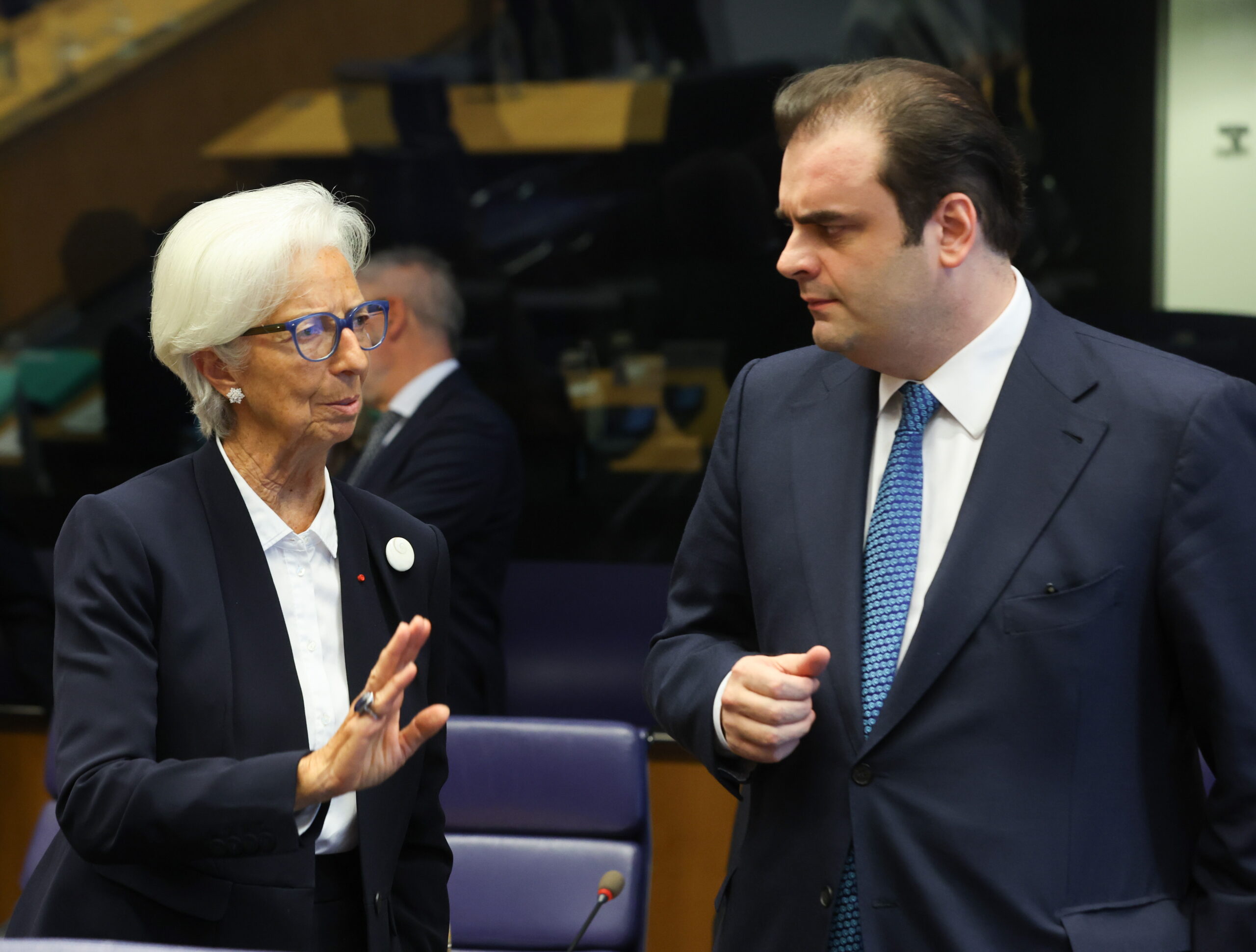
Averof Neophytou and Giorgos Pamporidis may have greeted each other with a warm handshake, but the photographs showing them sitting at a distance from one another only heightened the atmosphere of awkwardness among those present…
ΣΧΕΤΙΚΑ ΑΡΘΡΑ

DIKO: What’s next after Anita?

DISY: A party with one ballot and two candidates
Two in the Race
Despite the rumors that have been circulating for days from various circles—both within and outside Pindaros—about a third candidacy backed by the President’s Office or Nikos Anastasiadis, the internal party race will, barring any dramatic surprises, be between the two contenders.
Averof Neophytou launched his election campaign a few months after his electoral setback in 2023. In an effort to overturn his image as an unapproachable politician—in the eyes of many—the former DISY President has spent the last three years crisscrossing Cyprus from one end to the other, while hosting numerous party officials, supporters, and friends of DISY—and others—at his farm in Argaka. The operation of his political office, as well as his regular comments on current events, confirmed that his departure from the leadership of Synagermos did not amount to his political retirement.
On the other hand, Giorgos Pamboridis’s run in the parliamentary elections marked his return to the political forefront. This decision, combined with his critical remarks regarding the party’s trajectory in recent years, was, by all accounts, part of his broader effort to take the reins of DISY. His own party, which he accused in 2019 of leaning toward the far right. His long-standing tumultuous relationship with Averof Neophytou, as well as the behind-the-scenes events that led to the withdrawal of Annita Dimitriou, appear to be the factors that “sealed” his decision to run for the party nomination in ’28.
Tactics and Signatures
The fact that, immediately after Anita Dimitriou’s withdrawal and for nine days thereafter, Averof Neophytou maintained radio silence fueled rumors of a possiblecandidacy outside the party.
Speaking to “Alpha on Sunday,” sources close to the former DISY president categorically deny such a scenario, pointedly emphasizing that Averof “is preparing for a spectacular entry” into the party’s primary race. His own statement during the press conference he held on Friday is also telling. When asked to comment on whether he had collected the 500 signatures required to submit his candidacy, Averof Neophytou pointedly stated that he had been in a position to submit them three months ago. Sources indicate, however, that his campaign team has already far exceeded the requirement, having gathered more than 1,000 signatures.
Averof Neophytou’s prolonged absence from the media is a conscious choice on his part to avoid giving clear answers to a series of questions. Whether regarding the coercive—in the view of many—manner in which he imposed his candidacy, or the rumors circulating about threats made by Annita Dimitriou to force him to withdraw from the process.
In contrast to the former DISY President, Pamboridis’s campaign team has reported in recent days that in certain districts—particularly in Limassol— difficulty in collecting the required signatures, especially those that must come from members of the Supreme Council.
To that end, the Nicosia MP sent a text message to the members of the House on Wednesday morning asking them, if and when they so desire, to support his candidacy by signing the petition. This development, however, does not appear to be causing concern among Pamporidis’s supporters, as the week remaining until the submission of candidacies is considered more than sufficient to reach—and even exceed—the magic number of 500.
In his public appearances, Giorgos Pamporidis chooses to strike a forceful tone and take strong stances so as not to fly under the radar of his alarmed audience. Expressing his deep concern about the introversion and division plaguing DISY, he is attempting to win the support of party officials and members who appear equally disillusioned with the image the party has projected in recent years.
Predictions and Prospects
Today, Averof Neophytou enters the race as the favorite. His decade-long presidency of DISY has given him deep knowledge of the party machinery, while the personal relationships he has built over the years with officials throughout Cyprus give him a clear advantage. His core supporters have long been on high alert, with his organizational strength appearing most pronounced in Paphos, where he hails from, as well as in Famagusta and Limassol.
On the other side, George Pamborides knew from the outset that his candidacy would face difficulties, as his appeal among party officials outside Nicosia is noticeably limited. However, he appears to be focusing his efforts on the broader segments of the party’s base.
In an effort to broaden his audience, he did not hesitate—the day after Anita Dimitriou withdrew her candidacy—to praise her in a post on X. Referring, among other things, to a coordinated campaign to undermine her with “backstabbing and whispering,” Giorgos Pamporidis expressed his admiration and respect for her. His move is viewed by his critics—and others—as political opportunism, aimed at attracting the supporters of Annita Dimitriou.
The Narratives
Despite the messages to the contrary that they are trying to send, the Democratic Alarm is well aware that the November 28 election is not a contest of positions, but of personalities. In their effort, however, to win over the audience that continues to vote based on political proposals and approaches, each of the two candidates will present their own narrative to the concerned public.
With the reunification of Cyprus as the cornerstone of his candidacy, Averof Neophytou is attempting to present himself as the “President of the Solution,” warning that the prolonged deadlock in negotiations is bringing the island to the brink of permanent partition, the consequences of which would be disastrous for the future of the Greek Cypriot community.
At the same time, the former DISY president is expected to play the economic card, emphasizing the need for a just society, where citizens, along with the economic figures, should prosper. Finally, highlighting his extensive political experience, he will seek to present himself as the candidate of cooperation—the man who can bring together and unite political forces rather than divide them.
With the GESY as his banner, Giorgos Pamporidis will present himself as a reformer—a man who dares to challenge the establishment, to unite, and to deliver results. A man who is not afraid to criticize corruption and mismanagement, but also to speak out about the infiltration of organized crime into the country’s political system.
Describing himself as a representative of the modern Right, far removed from old-school party mindsets, he is expected to pressure Averof Neophytou over what many view as the political blackmail he used to secure his candidacy. That is, by leaving open the possibility of running for the presidency outside of party procedures.
A common thread between the two candidates will be their effort to distance themselves from the Christodoulides administration, with each presenting their own vision for the future of DISY and the party’s role on the political scene.
“Quiet” support?
The appeal by the party leadership to the members of the collective bodies to preserve their unifying role came as no surprise. It was the result of the discontent caused by the public statements made by Charalambos Pazaros and Michalis Ioannidis in support of the candidacies of Averof and Pamporidis, respectively. The issue was not the freedom of expression of party officials, but the risk of a cycle of public statements of support, with each official taking a stance in favor of one candidate or the other, further inflaming tensions between the two camps.
Indicative of the current climate within Synagermos is a statement made by a party official to “Alpha tis Kyriakis” on condition of anonymity: “All party officials have a preference for one of the two candidates. Behind the scenes, some have already begun campaigning, but the majority does not intend to take active steps, both to preserve unity and to maintain interpersonal balances.”
At the leadership level, Anita Dimitriou, as the guardian of the party’s unity, has made it clear that she will not take a position. The fact, however, that officials close to her are reportedly supporting Pamporidis’s candidacy raises certain questions… Despite what many are implying about the role and stance of Efthymios Diplaros in 2023, the party’s Deputy Chairman appears to be siding with the former DISY President. The same goes for Vice Presidents George Karoullas and Yiannis Karousos—who, for many, serve as Averof’s representatives within the party leadership — as well as the party’s Press Secretary, Onoufrios Koulla.
As for the parliamentary caucus, aside from Charalambos Pazaros, who has already publicly declared his support for Averof Neophytou, the rest are keeping a low profile. Parliamentary Spokesperson Dimitris Dimitriou made it clear a few days ago that, although he has an opinion, he does not wish to take a stance and does not agree with those who choose to do so, despite the fact that they have every right to do so.
In political circles, it is said that the picture of who supports whom has begun to become clearer behind the scenes. The overwhelming majority of MPs appear to be siding with Averof Neophytou, including: Charalambos Petridis, Andreas Konstantinou, George Karaiskakis, Michalis Fellas, Prodromos Alambritis, Dimos Georgiadis, and the three members of parliament from Famagusta—Karoullas, Georgiou, and Lysandridis.
According to reports, Savia Orfanidou and Nikoletta Konstantinou are backing Pamporidis, while it remains unclear what Fotini Tsiridou will do.
Furthermore, sources from “Alpha tis Kyriakis” indicate that Pamporidis’s candidacy is supported by a number of former ministers, such as Haris Georgiadis, Anastasia Anthousi, and Konstantinos Petridis. In fact, last Thursday, Haris Georgiadis met with Nikos Anastasiadis in Limassol, to whom he announced his decision not to run as a candidate, despite the strong urging he had been receiving recently from party officials.
It remains to be seen where other prominent members of Synagermos, such as Ioannis Kasoulides, Stella Kyriakidou, and Michalis Sophocleous, will stand. The fact that all three have maintained excellent relationships for years with both Averof Neophytou and Giorgos Pamboridis puts them in a very difficult position.
Party officials note that Averof Neophytou’s long-standing refusal to dispel speculation about his running as an independent in 2028 caused intense frustration among many officials. This could potentially translate at the polls into a hidden vote in favor of Pamporidis.
The image of division currently evident in the blue party headquarters has overshadowed the euphoria sparked by the parliamentary election results. Party officials estimate that the day after the internal party vote may find Synergismo even more deeply mired in introversion, as the wounds from the contest will be difficult to heal. Concerns about the days ahead are intensifying, as are the “warning signs” suggesting that the toughest days for DISY are still ahead…