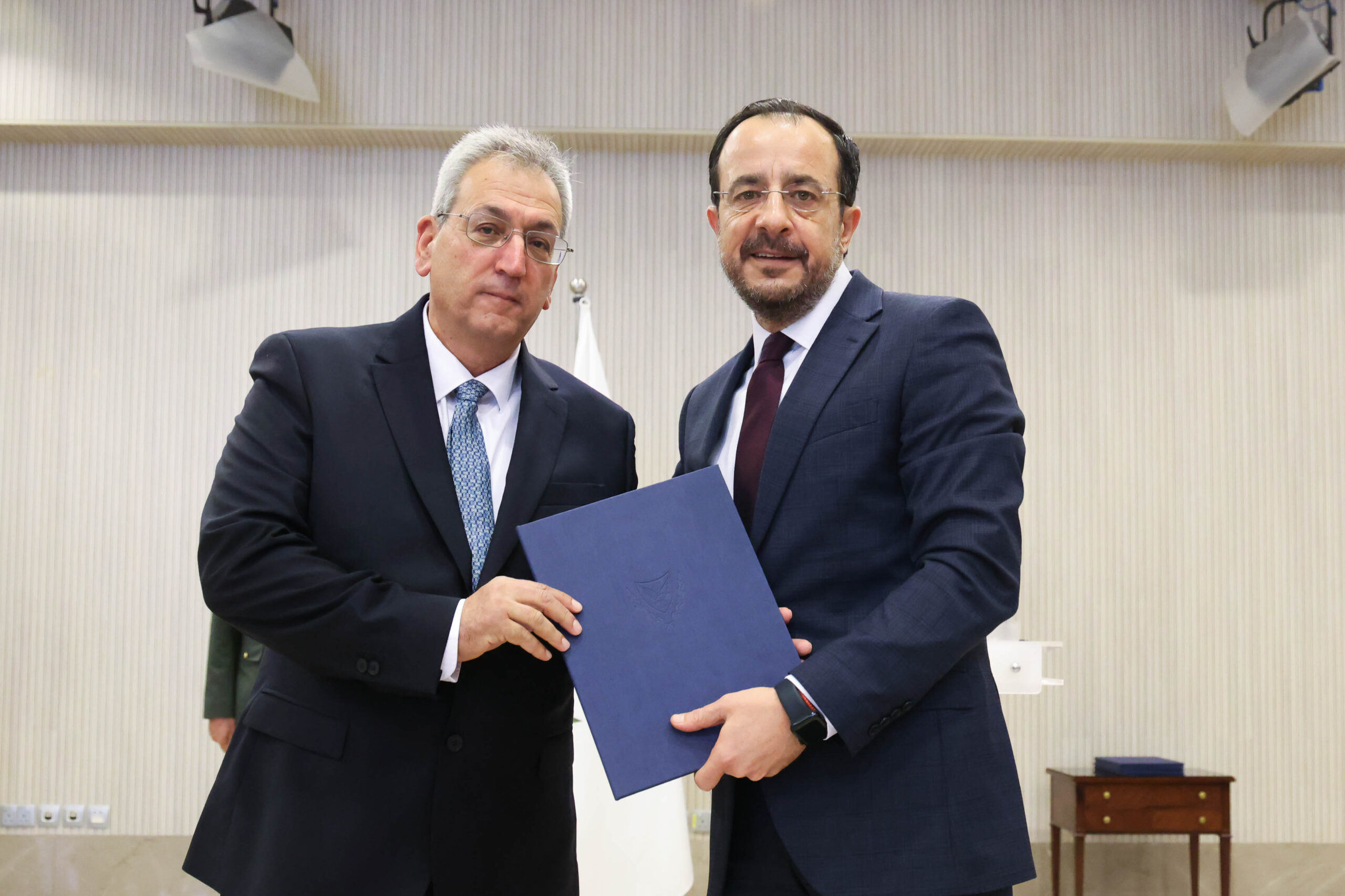
The status quo is deeply ingrained in the minds of our leaders, which is why they are unable to conceive of or promote initiatives aimed at the ultimate goal of resolving the problem
Not only is there no progress on the Cyprus issue, but every meeting between the two leaders also holds a surprise. The latest came via a United Nations communiqué informing the public in Cyprus that the two leaders “agreed to move forward with initiatives related to the environment and the exchange of cultural artifacts.” As for the environment, we didn’t learn anything. And to be honest, I didn’t even understand what these “artifacts” we’re going to exchange are. I was relieved, however, when I heard our President announce that these brilliant ideas are included in the 19 points he submitted to the Turkish Cypriot leader, which —supposedly—would move the process forward.
Is it really possible, at this critical juncture of the entire process, for the proposals to be at this level? An exchange of technicalities! I was under the impression that the much-touted 19 points—which were not provided in writing but were merely dictated to Erhurman, who was taking notes— would concern some substantive ideas that—if nothing else—would convince the international community that the Greek Cypriot side is doing everything possible to break the deadlock.
ΣΧΕΤΙΚΑ ΑΡΘΡΑ

With pocket money from Giota, Nikolas gets by for the week

The alarm in the second round of the election
But that is not all. Behind the “innocent” proposal for an exchange lies the way in which one perceives the Cyprus problem and its solution. An exchange means “give us what’s ours, and we’ll give you what’s yours.” Whatever that may be. Today, “cultural artifacts”; tomorrow, property (though this is already happening). It’s the same logic by which the opening of roadblocks is measured not by how many gaps you create in the line of division, but by which ones and how much they benefit each side.
I don’t know if I’m the odd one out in this whole Cyprus issue. It is, however, my firm belief that the status quo has become deeply entrenched in the minds of our leaders, which is why they are unable to conceive of or advance initiatives aimed at the overarching goal of resolving the problem. We are therefore limited to peripheral ideas within the framework of “reciprocity” that we have discovered in the tacit maneuvering of the policy for the “second-best solution.”
If these “artifacts” exist—which express the identity and history of each community—then someone who has in mind the prospect of peaceful coexistence and cooperation would gather them all in one place and highlight—through them—the common elements and the shared journey. For I am certain that this is precisely what the cultural artifacts President Christodoulides had in mind when he proposed this idea. However, instead of these artifacts coexisting somewhere—just as we supposedly want the two communities to coexist someday—we are exchanging them so that each side can “cleanse” its own space of the other’s traces. Even if the objects reveal cultural differences, these too are part of the Cypriot reality that we need to be aware of.
Am I getting bogged down in details? Perhaps. But it is precisely through such details that the deeper thoughts of those dealing with the Cyprus issue become apparent. They refer to “ours” and “theirs,” to “our space” and “their space.” And they fail to realize that even these objects (whatever they may be) are vessels of memory that should be used to seek common points of reference.
Be that as it may, this particular idea is nothing more than a reproduction of a similar concept from the past. It’s as if someone asked artificial intelligence for ideas, and it referred them to historical examples. Such as the one from 2019, when Turkish Cypriots returned 219 paintings by Greek Cypriot artists, and the Greek Cypriots handed over 76 audiovisual archival itemsrelating to the community’s history.
Even this proposal regarding Famagusta was nothing more than a repetition of an earlier one that had been rejected. It seems that when boldness, political imagination, and vision are lacking, people resort to copying… from their neighbors (or their predecessors).