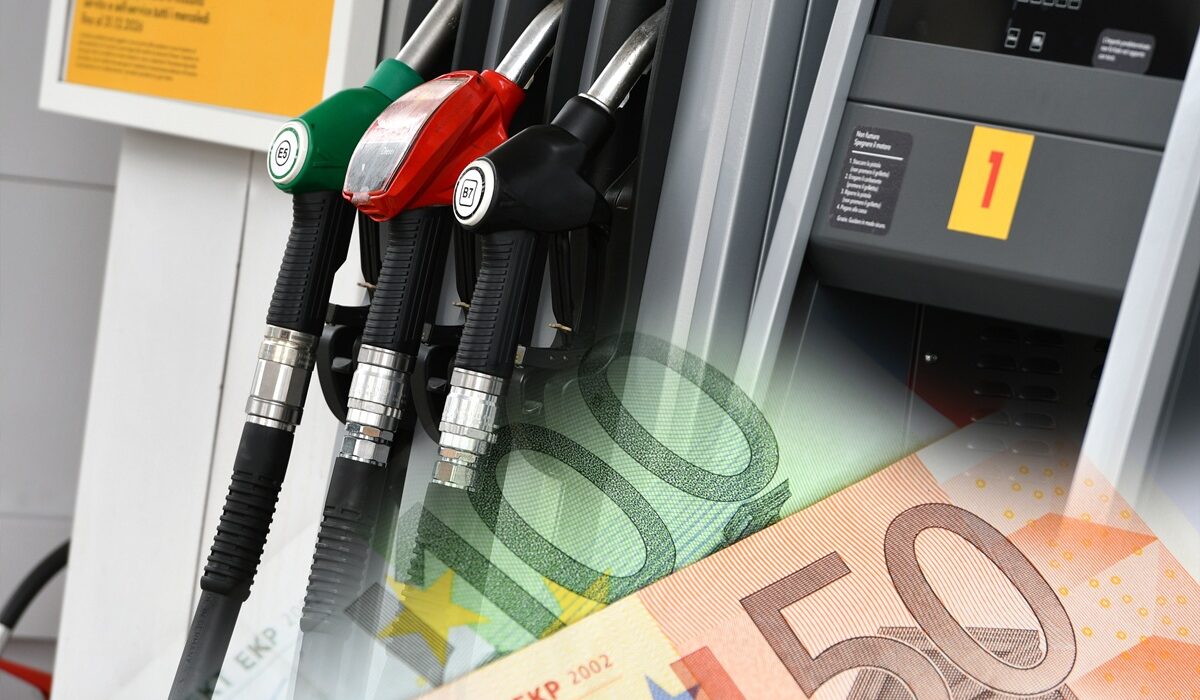
The methodology for monitoring fuel prices—which are currently at particularly high levels—as well as the circumstances under which government intervention may occur, were explained by Konstantinos Karagiorgis, Director of the Consumer Protection Agency, on the Alpha News program. The goal, he said, is to determine whether the increases are justified by market data, through daily monitoring of both wholesale and retail prices.

According to data from the Price Observatory, on October 6, the average price across Cyprus for unleaded 95 was €1.744 per liter, diesel at €2.028, and heating oil at €1.668. Compared to February 27, unleaded 95 has increased by 43 cents per liter, diesel by 61.8 cents, and heating oil by 71.9 cents, reflecting the severity of the price hikes that followed.
ΣΧΕΤΙΚΑ ΑΡΘΡΑ

Haris Papatheocharous: A photo with his wife from 2015

Pension reform: Aim is to bring it before the Cabinet soon
Read more: Are small fuel price increases on the way? What gas station owners are predicting
Mr. Karagiorgis pointed out that this situation is not unique to Cyprus, as similar increases are being recorded in other European Union countries due to external factors. “Cyprus is not a unique, uncontrollable case. That is what we want to make clear,” he said, noting that the Agency is examining these changes in the context of the broader European market.

At the same time, the reduction in the Special Consumption Tax continues to offset part of the burden on drivers. Based on current data, without this reduction, the average price of 95-octane unleaded gasoline would be approximately €1.827 per liter, instead of €1.744, while diesel would be around €2.111, instead of €2.028. The Director of the Agency described the reduction as significant for consumers, although final prices remain at very high levels.
Regarding market oversight, Mr. Karagiorgis noted that the Service uses an automated system and econometric methodology, taking into account a range of data, including international prices, import costs, and historical data. “Our system is based on a specific methodology that we monitor and evaluate. That is the Agency’s job,” he emphasized, adding that the inspections cover both the wholesale and retail markets. The legislation, as he noted, also provides for the imposition of price caps if the data indicate that something is not functioning smoothly.

According to him, monitoring is not limited to periods of rising prices but continues even when international prices fall, in order to determine whether price reductions are being passed on to the market in a timely manner. “The system monitors the market systematically and automatically,” he said, making it clear that if a potential violation is detected, the Agency will intervene. As for the significant variations from station to station, he attributed them, among other things, to purchase costs, the quantities procured by each business, and differences in commercial policies and profit margins.