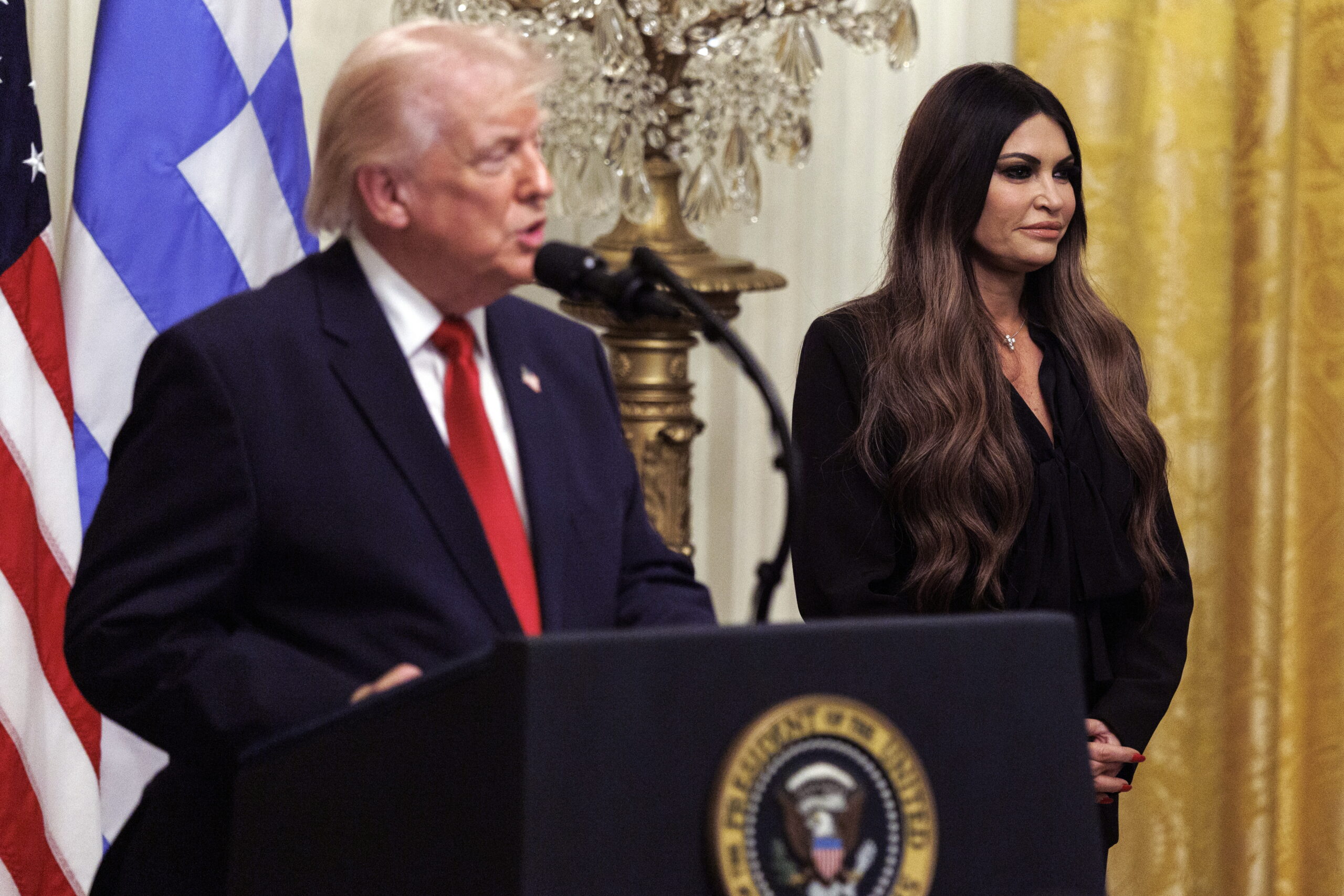
Fifty-two years have passed since the last documented resignation of a sitting U.S. ambassador to Greece, with the case of Kimberly Gilfoyle bringing to the forefront a particularly rare event in the history of Greek-American diplomatic relations.
The previous instance dates back to the summer of 1974, when the then U.S. ambassador to Athens, Henry Tasca, resigned from his post amid the Cyprus tragedy, the collapse of the military dictatorship, and one of the most serious crises in relations between Athens and Washington.
ΣΧΕΤΙΚΑ ΑΡΘΡΑ


Tasca had assumed his duties in January 1970, during the presidency of Richard Nixon, at a time when Greece was under the rule of the junta. His presence in Athens coincided with the U.S. government’s efforts to maintain strategic cooperation with Greece within the framework of NATO, despite the international backlash caused by the dictatorial regime.
In the summer of 1974, the coup against Archbishop Makarios, the Turkish invasion that followed, and the fall of the dictatorship in Greece created an entirely different political and diplomatic environment. U.S. policy toward the developments in Cyprus had provoked strong reactions among the Greek public, while the government of national unity under Constantine Karamanlis was attempting to redefine the country’s relationship with the United States.
On August 13, 1974, the new U.S. president, Gerald Ford, appointed Jack Kubis to succeed Henry Tasca. Two days later, the French newspaper Le Monde reported that the U.S. ambassador had just resigned from his post. According to the official historical records of the U.S. Department of State, Tasca’s diplomatic mission ended on September 16, 1974.
His departure was not a routine change in diplomatic representation. In a subsequent historical article, the Washington Post linked his sudden departure and resignation from the diplomatic service to the disagreements that had arisen regarding the overthrow of Makarios and political developments in Greece. This episode illustrates the depth of the crisis that had developed at that time between Athens and Washington.
The Second Major Diplomatic Crisis of 1977
Three years later, Greek-American relations were put to the test once again, this time due to the appointment of a new U.S. ambassador. In 1977, the government of Konstantinos Karamanlis reacted to the selection of William Soffele for the U.S. Embassy in Athens, following his remarks on the Aegean Sea during his confirmation hearing before the U.S. Senate.
Soffele had commented on Greek-Turkish disputes and the geographical location of the Greek islands near the Turkish coast, sparking strong reactions in Athens. The Greek government considered that these statements undermined his ability to effectively carry out his duties and asked Washington to reconsider its choice.
On December 7, 1977, the U.S. State Department withdrew his nomination. Soffele never took up his post in Greece. This was a significant diplomatic conflict, but not a resignation by a sitting ambassador, a fact that distinguishes this case from that of Tasca.
The Historical Comparison with the Gilfoyle Case
The current case involving Kimberly Gilfoyle brings back the issue of an American ambassador’s departure from Athens under extraordinary circumstances. According to information made public on October 13, the White House requested her resignation, while U.S. media reported that the ambassador had submitted her resignation in the wake of allegations regarding her conduct, which she denies.
The comparison with 1974 is primarily historical in nature, as the circumstances are entirely different. Tasca’s departure occurred during a period of war in Cyprus, political transition in Greece, and a deep crisis in bilateral relations. In contrast, the Gilfoyle case involves allegations against the diplomatic representative herself and the U.S. government’s handling of them.
From 1974 to the present, U.S. ambassadors to Athens have generally left upon the completion of their mission or as part of changes in the political leadership of the United States. Based on available historical data, no other documented case of a sitting U.S. ambassador to Greece resigning during his term has been identified in the intervening period.
The case of Henry Tasca therefore remains the most significant historical precedent for such a departure, with the key difference being that 52 years ago, the resignation was linked to the most serious geopolitical upheavals in the Eastern Mediterranean, whereas today the focus is on the allegations against the head of the U.S. diplomatic mission in Athens.
Source: Proto Thema