Mohammed Dahlan’s reappearance is causing concern for Fatah and President Abbas
The truth is that very few people were surprised when, late yesterday afternoon (Saturday, October 10) the postponement of the Palestinian legislative elections, scheduled for November 28, was announced. This was preceded by a chain of events that inevitably brought to mind the similar postponement of the Palestinian legislative elections that were to be held in May 2021.
ΣΧΕΤΙΚΑ ΑΡΘΡΑ

The paths of fire through cyprus

Riyadh Airport was hit by a missile; dozens injured (VIDEO)
And while the current situation in the Palestinian territories may not differ much from that time, if anything remains constant, it is that the path for Palestinian citizens in the West Bank and Gaza remains, even today, an uphill and arduous one. Suffice it to say that the last time the citizens of the Palestinian Authority elected their parliament was twenty full years ago, on January 25, 2006. And history always finds a way to repeat itself.
The Reasons for the Postponement
In a lengthy statement, the PLO Executive Committee ruled yesterday that conditions are not ripe for the November 28 elections to take place. Among the reasons cited were the turbulent situation in the West Bank, Israel’s repeated violations of the terms of the Oslo Accords, particularly the expansion of Jewish settlements, as well as the ever-increasing violence perpetrated by young Jewish settlers in Palestinian villages.
Additional causes cited include the stalemate in the implementation of the Trump Plan to end the war in Gaza, the absence of an international stabilization force and a Palestinian police force in the enclave, as well as the inability of the Central Election Commission and observers to enter the Gaza Strip. At the same time, the PLO Executive Committee, which serves as the umbrella organization for the majority of Palestinian political factions, points out that Israel continues to refuse to allow Palestinian parliamentary elections to be held in the Arab neighborhoods of East Jerusalem, which the Palestinian Authority defines as “an integral part of its territory and the future capital of the independent Palestinian state.”

Mahmoud Abbas – President of the Palestinian Authority
On the same day, President Mahmoud Abbas issued a decree stipulating that presidential and parliamentary elections would be held simultaneously on September 11, 2027, which were originally scheduled to take place in late November of this year.
The municipal elections went smoothly. Why not the parliamentary elections as well?
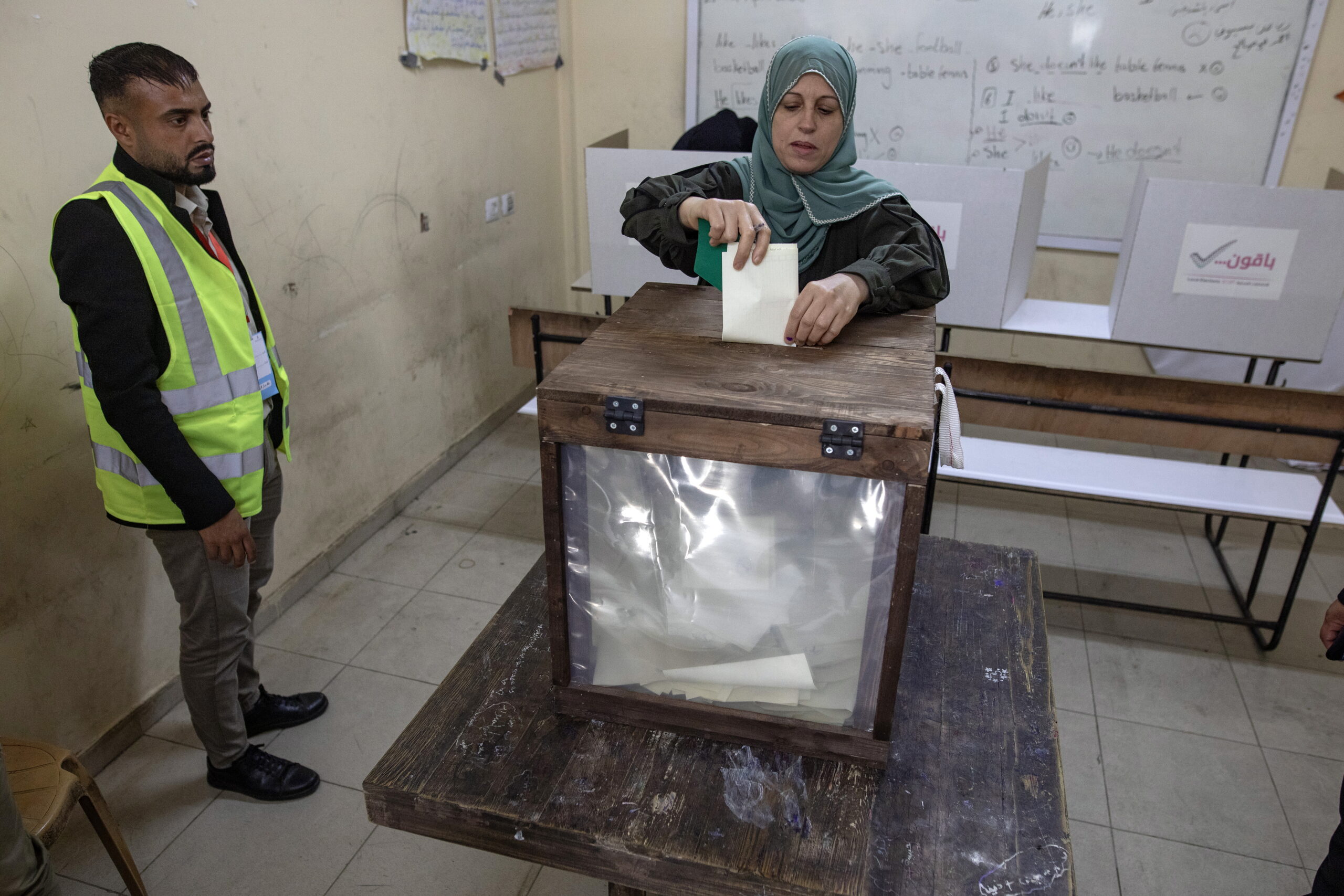
One initial question that might arise relates to the smooth conduct of the recent municipal elections, which took place on April 25, 2026. And at that time, there was no calm in the West Bank. Violent attacks by Jewish settlers were continuing. And at that time, the Trump Plan remained unfinished. And at that time, the planned international stabilization force had not yet been deployed in Gaza. And yet, the electoral process in the West Bank proceeded smoothly.
The vote covered 90 municipal and 93 local councils, while in the Gaza Strip it was limited to the municipality of Deir al-Balah. In total, the electoral plan included 420 local authorities, though voting did not take place in all of them. In several cases, candidates were declared winners without an election process, while in others there were no complete slates of candidates. It is worth noting, in fact, that voting in Dir al-Balakh took place under extremely difficult conditions, with the Central Election Commission adapting the polling stations to the reality created by the war. And in this way, the Palestinian Authority sought to keep the process of political representation alive in both Palestinian territories.
However, before we jump to the wrong conclusions, we must not overlook one important detail. Palestinian municipal elections have always been primarily “family-based” in nature rather than factional. In fact, in every municipal and community election, the major “clans” assert their influence, while political parties remain on the sidelines, discreetly monitoring local factional and ideological trends. And that’s where the matter ends.
The statements by Jibril Rajoub and the “wedge” driven by Mohammad Dahlan
The elections of November 28, 2026, had been announced by presidential decree on July 9, 2026. However, the general stagnation prevailing on the political scene raised questions about the prospects for the electoral process. Despite the fact that the electoral framework had already been established by legislation, political disagreements and logistical difficulties fueled doubts about whether the elections could ultimately be held on the scheduled date. At the same time, rumors were spreading that the parliamentary elections, one way or another, would most likely not take place.
The statements by the Secretary-General of the Fatah Executive Committee, Jibril Rajoub. Speaking to reporters in Ramallah on September 10, he made it clear that “the upcoming parliamentary elections will not take place on schedule,” adding that “the presidential elections will be held first.” Of particular interest was his statement that “the presidential elections will resolve many problems, as they are not costly and issues are resolved through broader consensus,” essentially leaving open the possibility that parliamentary elections might not even take place.

Jibril Rajoub – Secretary-General of the Fatah Executive Committee
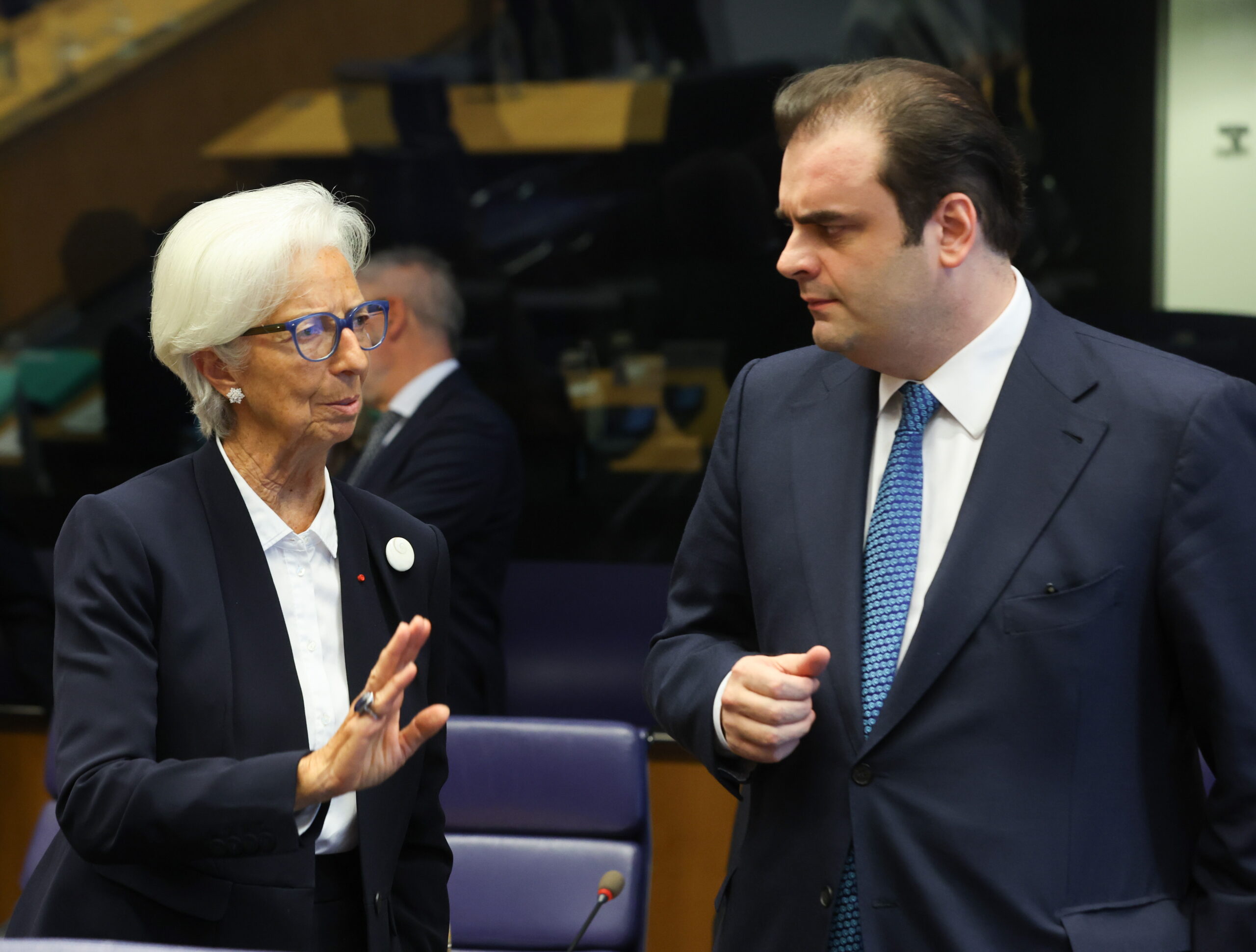
Meanwhile, a second development appeared to further complicate the situation. Shortly before Jibril Rajoub’s statements, reports had intensified regarding political contacts by Mohammad Dahlan —the most prominent political and personal rival of current President Mahmoud Abbas, who has been living permanently in the United Arab Emirates in recent years—— with figures from Hamas and Islamic Jihad. The reported aim of these contacts was to form a united political front that could serve as a counterweight to the ruling Fatah faction. In this context, there were reports of an effort to bring Dahlan’s faction, known as the “Democratic Reform Current,” closer to Hamas and Islamic Jihad. However, a distinction must be made between political contacts and the formal formation of a unified electoral coalition, which cannot be taken for granted without clear confirmation. In any case, these moves are reported to have caused concern within President Abbas’s inner circle and among Fatah in general. It is worth noting, in fact, that Dahlan, Hamas, and Islamic Jihad are not represented on the PLO Executive Committee, with all that this implies for the internal balances of the Palestinian political system.

Mohammed Dahlan
At the same time, however, as “Alpha on Sunday” was informed, Palestinian sources in Ramallah left open the possibility that the November parliamentary elections might be postponed, most likely to March 2027. The reason for this was, apparently, a desire not to upset certain Western governments, as well as the Trump administration, which would like to see the Palestinian Authority’s state institutions democratically legitimized. This is considered essential for the smooth implementation of the Trump Plan, especially with regard to the phase that calls for the Palestinian Authority to assume full control of the Gaza Strip. Palestinian decision-makers were also reportedly willing to discuss the possibility of bringing forward the presidential elections to March 2027, which would provide a smooth “conclusion” to President Mahmoud Abbas’s—by all accounts—extremely long tenure. However, the growing political activity surrounding Mohammad Dahlan appears to have begun to seriously concern the upper echelons of the ruling Fatah.
The Expected “Thorn” of East Jerusalem
A third factor that appears to have significantly influenced these developments relates to a report broadcast on Wednesday (October 7) by Israeli state television. Citing Israeli government sources, it reported that members of the Palestinian Authority’s Central Election Commission had submitted a request to Israeli authorities to allow polling stations to operate in the Arab neighborhoods of EastJerusalem, ahead of the Palestinian legislative elections in November. The request was reportedly submitted during the first week of October. This information has not been officially confirmed by the Israeli government, while the Palestinian side, according to available reports, has neither confirmed nor denied it, nor has it offered any comment.
It remains unclear whether Israel responded to this specific request. If it is confirmed that the request was submitted and went unanswered, it could be argued that the Israeli side chose not to take a public stance, possibly to avoid bearing the political cost of a decision that could influence the electoral process.
However, according to the relevant report, Israeli state television linked the news to the alleged concern within President Abbas’s and Fatah’s inner circle regarding the possibility of an electoral defeat at the hands of a potential alliance between Mohammad Dahlan, Hamas, and Islamic Jihad. The assessment that the request was submitted to avoid an electoral defeat—which could foreshadow a broader political upheaval— remains an interpretation of the report and not a confirmed fact. In any case, East Jerusalem remains one of the most sensitive issues in any Palestinian electoral process.
Repetition is the mother of all learning…
History repeats itself. In 2021, when the Palestinian legislative elections were scheduled to take place on May 22, Israel’s refusal to allow Palestinian elections to be held in East Jerusalem was a key reason cited by President Abbas for postponing them. On April 30, 2021, Abbas announced that the elections were being postponed indefinitely, citing the inability to ensure the participation of East Jerusalem residents. The decision sparked strong reactions, while opinion polls at the time had also caused quite a stir, showing strong momentum for Hamas and the prospect of its electoral victory.
In 2026, concern is once again emerging within Fatah’s ranks regarding the political balance of power and its electoral prospects. The difference, however, lies in the fact that there is insufficient public data to draw reliable conclusions about current voting intentions and the balance of power between Fatah, Hamas, and any potential new political formations.
The final answers are expected to come from the September 2027 elections, provided, of course, that there is no further postponement.