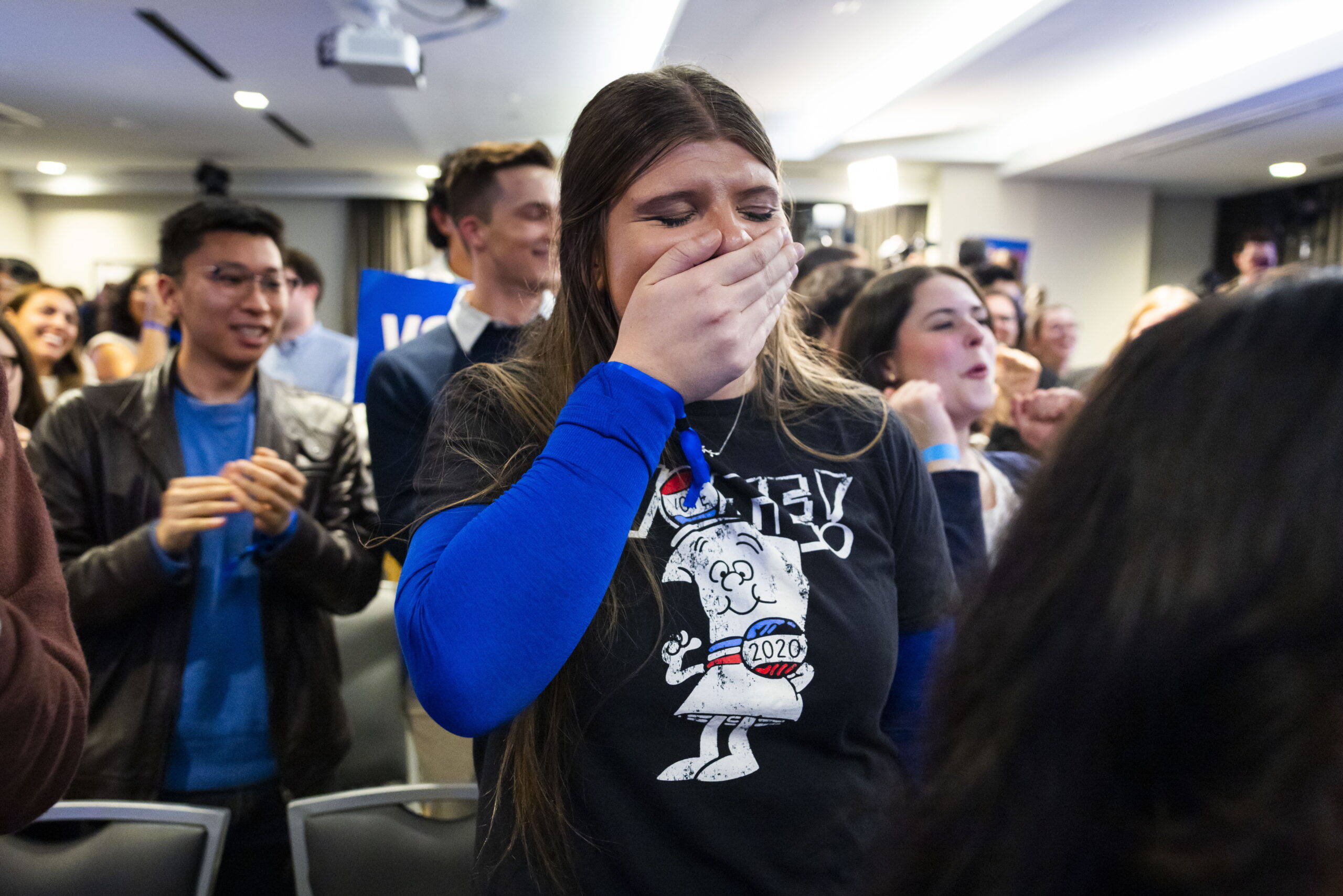
U.S. President Donald Trump is expected to face significant obstacles in advancing his policy agenda over the next two years of his term, following the results of the U.S. midterm elections and the sweeping defeat he suffered in the House of Representatives and the Senate.
Speaking on the “Alpha Kalimera” program, Michalis Kontos, Associate Professor of International Relations at the University of Nicosia, described the result as a clear victory for the Democrats and a defeat for the Republicans, with significant implications for the U.S. President. As he explained, the new composition of Congress creates a different political environment, which limits Donald Trump’s room to maneuver and strengthens the ability to check the executive branch.
ΣΧΕΤΙΚΑ ΑΡΘΡΑ


Obstacles to Trump’s Agenda
According to Mr. Kontos, the Democrats’ gains in Congress are expected to complicate the U.S. President’s efforts to advance his legislative agenda. At the same time, the Democrats will be able to advance legislative initiatives that are at odds with his goals, forcing him to take a stand against them.
Particular importance is also attached to the parliamentary oversight powers that the Democrats will acquire, as they will be able to summon individuals to appear before investigative committees for testimony and questioning.
Michalis Kontos even referred to the possibility of a third impeachment proceeding against Donald Trump, which, if it were to happen, would be a historic development. This is, however, a possibility linked to the new political balance of power and not a foregone conclusion.
Trump’s Stance and the Message to Democracy
Commenting on the U.S. President’s stance following the election results, the professor highlighted Donald Trump’s apparent acceptance of defeat, describing it as particularly significant for democracy in the U.S.
As he pointed out, acceptance of the election results and the orderly transfer of power—when a candidate is not re-elected by the citizens—are fundamental prerequisites for the functioning of democracy. Institutions and the separation of powers are not sufficient on their own, as the proper functioning of the political system also depends on the conduct of those in power.
In this light, Mr. Kontos assessed that Trump’s stance, if confirmed in practice, constitutes a positive development, especially given his previous challenges to election results.
Signs of Defeat and Traditional Strongholds
Referring to the extent of the Republicans’ electoral decline, Michalis Kontos noted that there were indications of the difficulties the party would face in the final days of the campaign. As he explained, Donald Trump’s increased campaign activity in states traditionally considered Republican strongholds indicated that there was concern about potential upsets in the electoral map.
The result, according to him, confirmed that political balances can shift even in regions with strong partisan traditions. These developments demonstrate the Republicans’ difficulty in maintaining their electoral momentum, despite Trump’s dominance within the party.
The Big Question for the 2028 Election
Despite their electoral successes, the Democrats continue to face significant challenges ahead of the 2028 presidential election, according to Michalis Kontos, who pointed out that the Republicans’ electoral decline does not automatically imply broad acceptance of the Democrats by American society. As he explained, while polls in recent weeks have shown signs of electoral gains for the Democrats, they have not demonstrated a corresponding rise in their overall popularity.
In his view, the key challenge for the party is to present a coherent policy platform capable of uniting the various factions within it.
In contrast to the Republicans, where Donald Trump has consolidated his control and is the central figure of their political identity, the Democrats are called upon to put forward figures and policy positions that will express a broader, shared vision.
The international relations expert referred to the various ideological and social groups that make up the Democratic Party, emphasizing the need to bridge internal differences and establish a clear political direction.
Who will ultimately emerge as the Democratic presidential nominee remains an open question. For Michalis Kontos, the answer will depend largely on whether the party manages to capitalize on its current electoral successes and turn the Republicans’ decline into a stable, broader political momentum.
Otherwise, he warned, the 2028 presidential election may unfold in a way that does not favor the Democrats, despite their victories in the midterm elections.
SEE ALSO: Cracks in Donald Trump’s Electoral Alliance and Upheavals in Congress